request to quote
Leave Your Message
0%

So, picking the best Energy Storage system for 2026? It takes way more than just comparing battery capacity or whatever efficiency number looks best on a spec sheet. Buyers around the world need proof from real-world operating conditions—not just pretty brochures. Things like climate, grid stability, electricity prices, financing, and local service can completely change what’s right for you.

Dr. Imre Gyuk, a well-respected energy storage expert and former program manager at the U.S. Department of Energy, once said, “Energy storage is the key to making renewable energy work.” That still rings true in 2026. Solar power peaks at noon, but factories might need electricity long after sunset. A reliable system has to bridge that gap safely—and predictably.

This guide looks at lithium iron phosphate batteries, long-duration storage, thermal management, power conversion systems, and intelligent energy management software. It also takes into account Commercial And Industrial Energy Storage Systems for factories, warehouses, hospitals, and logistics centers. Buyers should dig into round-trip efficiency, degradation warranties, fire protection, cybersecurity, installation records, and replacement planning. A cheap upfront price can easily hide expensive maintenance or limited support later.

Manufacturers like Tesla, Fluence, Sungrow, BYD, CATL, and Wärtsilä each bring different strengths to the table. No single brand works for every market. And that really matters.

Now, some rankings are still imperfect. Public performance data isn’t always consistent, and project results can depend a lot on climate and how well operators are trained. So this overview leans toward transparent specs, verified deployments, and practical ownership costs. Even so, buyers should ask for site-specific simulations and independent technical reviews before signing anything. The best energy storage systems aren’t always the biggest. They’re the ones that keep performing reliably when conditions get tough.
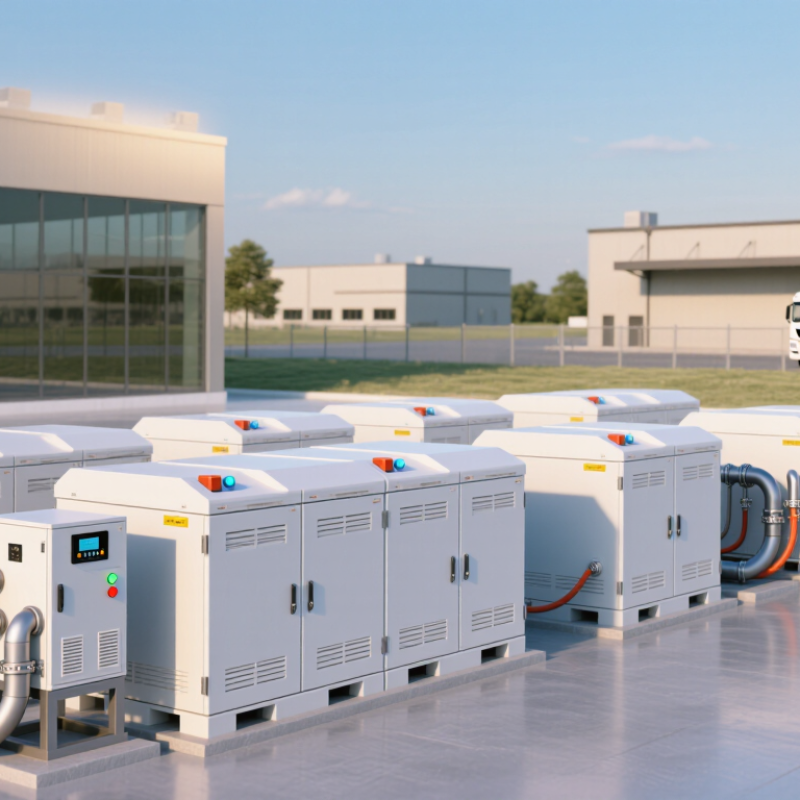
2026 Best Energy Storage Systems for Global Buyers

Energy Storage Systems: Definition, Purpose, and Core Technologies

Energy storage systems capture electricity, hold it, and release it when demand or supply changes. Their purpose is practical: shifting solar power into evening hours, reducing peak charges, stabilizing frequency, and supporting backup loads. A complete system includes battery modules, a power conversion system, an energy management system, cooling, monitoring, and fire protection. The battery is only one part.

The IEA reported nearly 42 GWof new battery storage capacity worldwide in 2023, with additions rising sharply from the previous year. IRENA’s Renewable Power Generation Costs in 2023 report found that utility-Scale Battery storage costs fell by about89% between 2010 and 2023. These figures show stronger commercial momentum, but they do not remove design risks. Heat, humidity, cycling depth, and grid connection rules can change project performance.

Types Of Battery Energy Storage Systems include lithium-ion, flow, lead-acid, and emerging sodium-ion systems. Lithium-ion offers high efficiency and compact installation. Flow batteries can suit longer-duration operation, although their tanks require more space. Sodium-ion may reduce dependence on certain minerals, but supply chains and field experience remain less mature. No technology wins every duty cycle. Site evidence matters. During commissioning, buyers should verify usable capacity, response time, round-trip efficiency, degradation assumptions, and emergency procedures. A promised runtime can look impressive on paper. It may shrink under extreme temperatures or repeated daily cycling. This is where specifications need honest review.

How to Classify Energy Storage Systems by Scale and Application

For global buyers in 2026, energy storage should be classified by scale, duration, and application. Capacity alone can mislead. A 10 kWh home battery and a 10 MWh industrial system serve different operational goals.

Residential systems usually range from 5 to 30 kWh. They support rooftop solar, backup power, and evening load shifting.

Commercial and industrial systems often span 30 kWh to 5 MWh. Factories may use them for peak-demand control, power-quality support, and resilience during short outages.

Utility-scale projects commonly exceed 5 MWh and can reach several hundred megawatt-hours. They provide frequency regulation, renewable integration, and capacity during high-demand periods. These boundaries are practical, not universal. Scale changes everything.

Application also determines the correct duration. A fast-response system may deliver power for minutes, while solar shifting often requires four to eight hours.

The International Energy Agency reported that global battery storage additions nearly doubled in 2023, reaching about 42 GW. Its 2024 Batteries and Secure Energy Transitions report also identifies grid-scale storage as essential for expanding renewable generation.

Lazard’s 2024 Levelized Cost of Storage analysis placed four-hour lithium-ion storage costs near 60–210 USD per MWh, depending on project assumptions.

These figures are useful, but not perfect. Local tariffs, interconnection delays, temperature, and replacement planning can change the result significantly. A buyer should examine usable capacity, not only the advertised number.

Battery Chemistry, Performance Metrics, and Expected Service Life

For global buyers, Electrical Energy Storage Systems should be compared by chemistry, usable capacity, efficiency, and service life. Lithium iron phosphate (LFP) cells generally offer strong thermal stability and about 6,000–10,000 cycles under controlled conditions. Nickel-manganese-cobalt chemistry can provide higher energy density, but repeated deep cycling may accelerate degradation. Chemistry matters.

The U.S. National Renewable Energy Laboratory’s 2024 Annual Technology Baseline uses approximately 85% round-trip efficiency and a 15-year life for utility-scale battery storage assumptions. These figures are planning benchmarks, not promises. Real performance depends on temperature, charge rate, depth of discharge, and battery management quality. A system operating near 35°C may age faster than one kept around 25°C. Heat changes everything.

The International Energy Agency reported that global battery storage additions grew sharply in 2023, reflecting stronger demand for flexible power assets. Buyers should request capacity-retention curves, cycle-life test conditions, and warranty exclusions. A stated 10,000-cycle life can sound impressive, yet it may assume shallow daily cycling and ideal temperatures. I would also examine round-trip efficiency at partial load, not only the headline rating. Field measurements often differ from laboratory results. That gap deserves scrutiny.

Comparing Grid-Scale, Commercial, Residential, and Portable Systems

In 2026, global buyers should compare storage by application, not impressive capacity alone. Grid-scale systems support frequency control, peak shifting, and renewable balancing. They often use containerized batteries with fire detection, thermal management, and remote monitoring. Buyers should examine round-trip efficiency, degradation rates, response time, and local grid requirements. A large battery is not automatically the best investment.

Commercial systems reduce demand charges and protect essential operations during outages. Their design depends on load profiles, operating hours, and available electrical space. Residential systems usually prioritize backup power, solar self-consumption, and quiet operation. Portable systems serve camping, field work, and emergency charging. They need lighter enclosures, clear output ratings, and dependable battery protection. The phrase Types Of Solar Energy Storage Systems covers these choices, but real performance depends on installation quality and daily use. Some forecasts feel too confident.

Tips: Request measured performance data, not only laboratory claims. Check usable capacity after reserve limits. Confirm temperature ranges, certification, maintenance access, and recycling arrangements. For commercial and grid projects, require an independent safety review and a realistic financial model. For homes, test whether the system can start refrigerators, pumps, or medical equipment. Portable buyers should inspect cable quality and recharge time. Leave room for uncertainty; electricity prices, weather, and operating habits can change.

Safety Standards, Installation Requirements, and Maintenance Practices

Choosing among the Types Of Energy Storage Systems requires more than comparing capacity and price. Buyers should review battery chemistry, thermal behavior, enclosure ratings, and emergency controls. Certified equipment should meet applicable electrical, fire, and transport standards in the target market. Requirements differ by country, utility, and building type.

Installation should begin with a documented site assessment. Check ventilation, floor loading, flood risk, cable routes, and clear access for emergency teams. Keep combustible materials away from battery cabinets. A qualified electrician should verify grounding, protection devices, isolation switches, and communication settings. Leave service space around the system. Small errors matter. An overloaded circuit or poor airflow can create expensive problems.

Tips: Record the installation date, firmware version, test results, and installer credentials. Inspect terminals for heat marks, dust, moisture, or unusual odor. Review alarms promptly, even when the system still operates. Schedule professional inspections according to local rules and the manufacturer’s service instructions. Do not open sealed battery modules without authorization. Maintenance plans often look complete on paper, yet real sites become dusty and crowded. Recheck assumptions after the first month, especially temperature readings and shutdown procedures.

How Global Buyers Can Evaluate Costs, Suppliers, and Total Value

Global buyers should assess energy storage systems through total value, not purchase price alone. BloombergNEF reported an average lithium-ion battery pack price of $115 per kWh in 2024, a 20% annual decline. However, system pricing also includes inverters, installation, transport, software, financing, replacement parts, and grid connection.

Ask suppliers for a transparent five-year and fifteen-year cost model. Compare usable energy, round-trip efficiency, cycle life, degradation curves, and guaranteed availability. A system rated at 10 MWh may deliver less usable capacity after temperature limits and reserve settings. The International Energy Agency estimates that global battery storage capacity must reach 1,500 GW by 2030 in its net-zero pathway. That growth makes supplier quality and long-term service increasingly important.

Look for documented project experience in climates similar to the target site. Check response times, spare-parts locations, cybersecurity controls, fire-safety testing, and warranty exclusions. Lazard’s Levelized Cost of Storage analysis shows utility-scale battery costs vary widely, depending on duration, financing, and operating assumptions. A low quote can still be expensive. This is where buyers often misjudge. Request independently verifiable test records and references from operating projects, not only factory demonstrations. Reported efficiency may also exclude auxiliary loads, cooling, or standby consumption. That detail deserves attention. Batteries are physical assets, and optimistic spreadsheets cannot repair poor maintenance planning.

2026 Best Energy Storage Systems for Global Buyers - How Global Buyers Can Evaluate Costs, Suppliers, and Total Value

Indicative comparison for utility-scale and large commercial projects. Values are technology-level benchmarks rather than quotations from individual suppliers.

Storage System Typical Project Duration Indicative Installed Cost
(USD/kWh)
Round-Trip Efficiency Expected Service Life Cycle Capability Typical Annual Capacity Degradation Best-Fit Applications Key Buyer Advantages Main Buyer Risks or Constraints Typical Development Lead Time Value Assessment for 2026 Buyers
Lithium-Iron-Phosphate Battery (LFP BESS) 1–4 hours $180–$320 85–93% 12–20 years 4,000–8,000 equivalent full cycles Approximately 1.5–3.0% Renewable shifting, frequency regulation, peak shaving, capacity support, microgrids High supply-chain maturity, strong energy density, fast response, modular deployment, broad financing familiarity Thermal runaway protection is required; performance depends on temperature control, operating profile, warranty limits, and augmentation planning Approximately 9–24 months after permitting and grid approval Best overall choice for most 1–4 hour projects when safety engineering, warranty quality, and lifecycle augmentation are properly evaluated
Nickel-Manganese-Cobalt Battery (NMC BESS) 1–4 hours $220–$400 88–95% 10–16 years 2,500–5,000 equivalent full cycles Approximately 2.0–4.0% Space-constrained sites, mobile or hybrid applications, high energy-density installations Higher energy density than many stationary alternatives and potentially lower land and enclosure requirements Greater dependence on nickel and cobalt markets, stricter thermal management requirements, and generally less attractive economics for long-duration stationary use Approximately 9–24 months Useful where space is expensive; usually less compelling than LFP for large stationary projects focused on long service life and low operating risk
Sodium-Ion Battery System 1–4 hours $180–$320 85–92% 10–20 years 3,000–6,000 equivalent full cycles Approximately 1.5–3.5% Cold-climate projects, short-duration renewable integration, cost-sensitive grid applications Reduced dependence on lithium, nickel, and cobalt; potentially improved low-temperature performance and raw-material availability Lower commercial maturity, less field history, lower energy density, and potentially limited bankability or spare-parts coverage in some markets Approximately 12–30 months Promising emerging option; buyers should require independently verified performance data, bankable warranties, and local service capability
Vanadium Redox Flow Battery 4–12 hours $350–$700 65–85% 20–30 years 10,000–20,000+ cycles Generally below 1.0% Daily long-duration shifting, renewable firming, high-cycle industrial loads, projects requiring independent power and energy sizing Very high cycle life, low capacity fade, nonflammable electrolyte, and simpler augmentation through additional electrolyte or tanks Higher upfront cost, lower efficiency, larger footprint, pump and membrane maintenance, and exposure to vanadium price volatility Approximately 18–36 months Strong lifecycle-value candidate for frequent 4–12 hour cycling, especially where safety and long life outweigh lower round-trip efficiency
Pumped-Storage Hydropower 8–24+ hours $100–$300 75–85% 50–100 years 15,000–25,000+ cycles Usually below 0.2% National or regional grid balancing, bulk renewable integration, reserve capacity, multi-hour energy shifting Very long asset life, large scale, proven technology, low degradation, and potentially low cost per stored kilowatt-hour Highly site-dependent, substantial civil works, water and environmental approvals, geological risk, and limited geographic availability Approximately 5–10+ years Best long-term value where suitable geography exists; not appropriate for buyers needing rapid deployment or distributed systems
Compressed-Air Energy Storage 8–24+ hours $100–$250 55–70% 30–50 years 10,000–20,000+ cycles Usually below 0.5% Large-scale, long-duration storage where suitable underground caverns or geological formations are available Long asset life, potentially low energy-capacity cost, and reduced reliance on electrochemical materials Strong geological dependence, lower efficiency, complex permitting, possible use of fuel in some configurations, and limited project track record in certain regions Approximately 3–8+ years Potentially attractive for bulk storage, but geological feasibility and full-cycle environmental performance must be confirmed before procurement
Thermal Energy Storage with Power Conversion 6–15 hours $150–$400 40–75% 20–40 years 5,000–15,000 cycles Generally below 1.0% Industrial heat, district energy, concentrated solar power, combined heat and power, and applications where heat is the primary output Low-cost storage media, long life, reduced dependence on battery minerals, and strong value when usable heat is required Lower electricity round-trip efficiency, site-specific integration, heat losses, and limited suitability for conventional electricity-only markets Approximately 18–48 months High value for heat-led projects; usually not the preferred option for electricity-only arbitrage or ancillary-service markets

Cost and evaluation basis: Installed-cost ranges are indicative 2026 planning benchmarks in U.S. dollars and may include core equipment, power-conversion equipment, balance of plant, installation, controls, and commissioning. They generally exclude land, financing, taxes, import duties, transmission upgrades, major civil works outside the project boundary, and extraordinary site remediation. Actual cost varies materially by project size, country, labor, interconnection requirements, permitting, exchange rates, safety standards, and duration. Buyers should compare bids using levelized cost of storage, availability guarantees, round-trip efficiency at the point of interconnection, degradation and augmentation obligations, warranty exclusions, safety certifications, cybersecurity, spare-parts support, and end-of-life responsibilities.

Reference basis: Ranges are synthesized from publicly reported technology benchmarks and market studies published by international energy agencies, national laboratories, grid operators, and engineering-cost databases. They are intended for preliminary supplier screening and should be replaced by project-specific, independently verified quotations during procurement.

Liquid-Cooled Battery Containers for Commercial Storage: Insights from IEA and BloombergNEF Reports

As highlighted in IEA and BloombergNEF outlooks, commercial energy storage is moving toward safer, more efficient, and increasingly integrated systems that can support renewable power, peak-load management, and grid flexibility. Liquid-cooled battery containers are well suited to these demands because they maintain more consistent cell temperatures, helping improve operational stability and extend service life under intensive charging and discharging conditions. This approach is especially valuable for commercial and industrial projects where space, reliability, and predictable performance are essential.

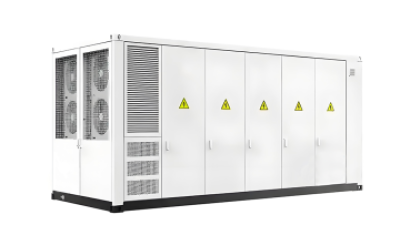
The proposed liquid-cooled battery container provides 3,440.64 kWh of rated energy at a nominal voltage of 1,228.8 V, with a working voltage range of 1,075.2–1,401.6 V. Its all-in-one design integrates the battery pack, EMS, PCS, and related accessories into a 20-foot container, simplifying deployment and reducing onsite integration requirements. Measuring 6,058 × 2,438 × 2,896 mm and weighing no more than 35 tonnes, it offers IP54 protection and can operate at altitudes up to 3,000 meters. With a cycle life exceeding 8,000 cycles, the system is designed for long-term commercial applications requiring dependable energy shifting, renewable-energy integration, and daily load optimization.

FAQS

What is an energy storage system?

It captures electricity, stores it, and releases it when supply or demand changes. A complete system includes batteries, power conversion, controls, cooling, monitoring, and fire protection. The battery is only one part.

Why do people use energy storage systems?

They can shift daytime solar power into evening hours. They may reduce peak charges, stabilize frequency, and support backup loads. Actual savings depend on tariffs, usage patterns, and control settings.

Which battery technologies are available?

Common options include lithium-ion, flow, lead-acid, and sodium-ion systems. Lithium-ion is compact and efficient. Flow batteries can support longer operation but need larger tanks. Sodium-ion may reduce dependence on certain minerals, though field experience remains limited. No technology wins every duty cycle.

What performance details should buyers verify?

Review usable capacity, response time, round-trip efficiency, and degradation assumptions. Check expected performance during heat, humidity, and repeated daily cycling. A promised runtime can look impressive. It may shrink in extreme temperatures.

What should a site assessment examine?

Inspect ventilation, floor loading, flood risk, cable routes, and emergency access. Keep combustible materials away from battery cabinets. Leave clear service space around the equipment. Small errors matter.

What electrical and safety checks are important?

A qualified electrician should verify grounding, protection devices, isolation switches, and communication settings. Equipment should meet applicable electrical, fire, and transport standards. Requirements vary by country, utility, and building type. Local conditions decide.

How should an installed system be maintained?

Record the installation date, firmware version, test results, and installer credentials. Inspect terminals for heat marks, dust, moisture, or unusual odors. Review alarms promptly, even when the system still operates. Do not open sealed battery modules without authorization.

Why should the system be reviewed after installation?

Real sites become dusty and crowded. After the first month, recheck temperature readings and shutdown procedures. Early data may expose a weak assumption. Paper plans are not always accurate.

Conclusion

Energy Storage Systems are technologies designed to capture electricity and release it when needed, supporting grid stability, renewable energy integration, backup power, and energy cost management. This overview explains core technologies, including battery-based, thermal, mechanical, and other storage approaches, while showing how systems can be classified by scale and application. It compares grid-scale, commercial, residential, and portable solutions according to capacity, response time, efficiency, flexibility, and expected service life.

The article also examines battery chemistry, key performance metrics, degradation, safety standards, installation requirements, and practical maintenance procedures. For global buyers, selecting the right system requires more than comparing purchase prices. Buyers should assess energy capacity, power output, operating conditions, warranty coverage, regulatory compliance, supplier reliability, technical support, and replacement considerations. By evaluating total cost of ownership and long-term value, organizations and households can choose safe, efficient, and scalable storage solutions that align with their energy needs and operating goals.
Sophia

Sophia

Sophia is a dedicated marketing professional at Zhongna Times (Shenzhen) New Energy Technology Co., Ltd., where she possesses an exceptional level of expertise in the company’s innovative product offerings. With a focus on renewable energy solutions, Sophia plays a pivotal role in promoting the......
Previous Top 10 Types of Lead Acid Replacement Lithium Batteries