- Home
- Products
- Solution
- About Us
- Project
- Blog
- Contact Us
Leave Your Message
Choosing the right Golf Cart Batteryin 2026 requires more than comparing prices. A Battery must match the cart’s voltage, motor demands, charger, climate, and driving routine. A two-seat cart used on flat paths needs different support from a six-seat cart climbing steep hills daily.
Isidor Buchmann, founder of Cadex Electronics and a respected battery-industry expert, states, “The battery is the most complex component in a portable device.” That warning also applies to golf carts. Chemistry changes performance. Flooded lead-acid batteries usually cost less, but they need regular watering and ventilation. AGM batteries reduce maintenance, while lithium batteries offer lower weight, faster charging, and deeper usable capacity. The best choice depends on the whole system.
Look closely at amp-hour capacity, cycle life, warranty coverage, terminal design, and battery-management-system protection. Confirm charger compatibility before installation. An incompatible charger can shorten service life and create avoidable safety concerns. Check the manufacturer’s specifications, not only a seller’s headline claim. Trojan Battery Company and other established manufacturers publish useful technical information, but product fit still matters.
Small details reveal real value. Measure the battery compartment. Inspect cable length and connector condition. Consider winter storage and summer heat. A lithium pack may improve hill performance, yet its higher purchase price may not suit occasional users. That is uncomfortable. There is no universal winner.
Even experienced owners get this wrong. They often compare purchase prices while ignoring charging habits, replacement timing, and maintenance labor. This guide examines those trade-offs carefully, helping you choose a reliable Golf Cart Battery for practical 2026 use.
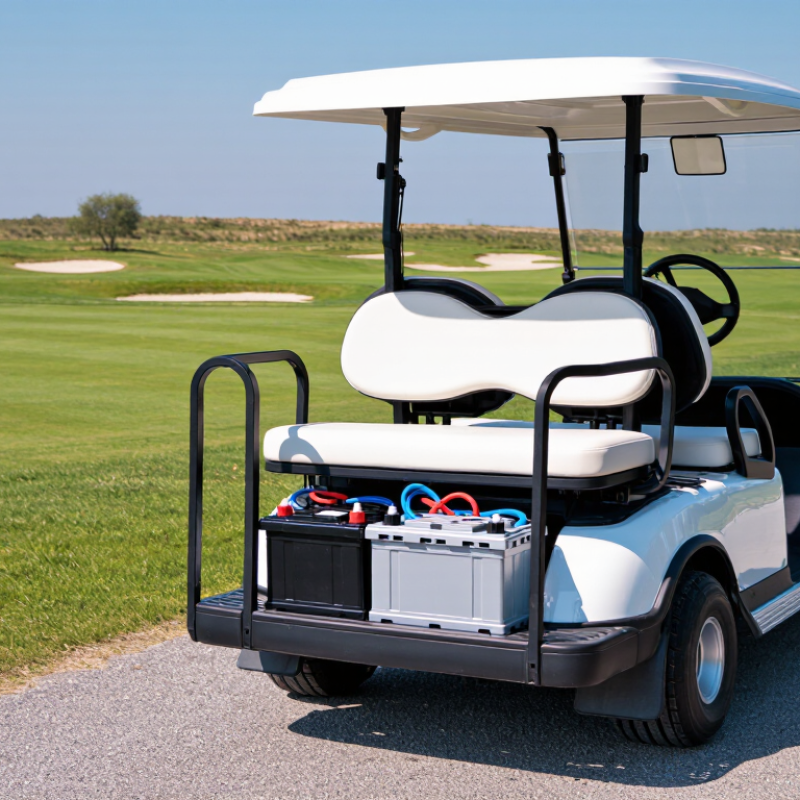
Choosing a golf cart Battery Starts with understanding its role in vehicle performance. The battery supplies current to the motor, lights, and onboard accessories. A weak battery can cause slow acceleration, short travel distance, and uneven hill climbing. A36v Golf Cart Battery must match the cart’s required voltage. Never rely on appearance alone. Check the vehicle manual and battery compartment labels.
In practical inspections, I check capacity, terminal condition, charging behavior, and cable tightness. Lead-acid batteries usually need regular water checks and clean ventilation. Lithium batteries are lighter and often provide steadier power, but they still require a compatible charger and control system. Loose terminals create resistance and waste energy. Clean connections matter. I once inspected a cart with fresh batteries but poor cable contact. Its motor struggled under load, which initially looked like a battery fault.
Temperature also changes battery performance. Cold conditions can reduce available power during early morning use. Excessive heat may speed up aging and damage internal components. Storage habits matter too. Keep the cart charged according to its battery type, and avoid leaving it unused for long periods. Published capacity figures are helpful, but real performance depends on load, terrain, tire pressure, and driving habits. A multimeter and a controlled hill test can reveal more than a quick visual check. I still find that battery selection is sometimes rushed, and that mistake becomes expensive later.
| Battery Type | Common System Voltage | Typical Usable Capacity | Typical Service Life | Approximate Weight per Battery | Charging Characteristics | Maintenance Requirements | Effect on Vehicle Performance | Best Use Case |
|---|---|---|---|---|---|---|---|---|
| Flooded Lead-Acid | 6 V, 8 V, or 12 V batteries combined into a 36 V or 48 V system | Approximately 180–225 Ah for common deep-cycle configurations | About 3–5 years with correct charging and maintenance | Approximately 55–75 lb (25–34 kg) | Usually 6–10 hours for a full charge, depending on charger output and battery condition | Requires regular watering with distilled water, terminal inspection, cleaning, and adequate ventilation | Reliable low-speed torque, but the vehicle becomes heavier. Voltage may drop more noticeably near low state of charge. | Budget-focused users who want a widely available and proven deep-cycle option |
| Absorbent Glass Mat (AGM) Lead-Acid | 6 V, 8 V, or 12 V batteries combined into a 36 V or 48 V system | Approximately 150–220 Ah, depending on battery size and configuration | About 4–7 years under suitable operating conditions | Approximately 60–80 lb (27–36 kg) | Usually 6–10 hours; charging requires a charger profile compatible with AGM batteries | Sealed and maintenance-free during normal use; terminals and cables should still be inspected | Provides consistent power with less maintenance than flooded batteries, but retains substantial battery weight. | Users who prefer lead-acid durability without routine watering |
| Gel Lead-Acid | 6 V, 8 V, or 12 V batteries combined into a 36 V or 48 V system | Approximately 150–220 Ah, depending on configuration | About 4–7 years when charged correctly | Approximately 60–80 lb (27–36 kg) | Often 8–12 hours; overcharging can permanently damage the gel electrolyte | Sealed and normally maintenance-free; requires careful voltage control and suitable charging settings | Smooth and stable output, but charging limitations can reduce convenience and poor charging may shorten battery life. | Applications needing sealed lead-acid construction and relatively low daily energy demand |
| Lithium Iron Phosphate (LiFePO4) | Commonly configured as a 36 V or 48 V battery pack | Approximately 100–200 Ah; usable energy is generally higher than an equivalently rated lead-acid pack | About 8–12 years or approximately 2,000–5,000 cycles, depending on depth of discharge and temperature | Approximately 90–180 lb (41–82 kg) for a complete pack, depending on capacity | Often 3–6 hours with a compatible charger; charging below freezing may require protection or heating | Normally maintenance-free; requires an integrated battery-management system and compatible charger | Lower vehicle weight improves acceleration, hill climbing, handling, and energy efficiency. Voltage remains more stable during discharge. | Frequent use, long daily driving distances, reduced maintenance, and improved overall driving performance |
| Lithium-Nickel-Manganese-Cobalt Oxide (NMC) | Commonly configured as a 36 V or 48 V battery pack | Approximately 100–200 Ah, depending on the pack design | About 5–10 years or approximately 1,000–2,500 cycles, depending on thermal management and usage | Approximately 80–170 lb (36–77 kg) for a complete pack | Often 3–6 hours with a compatible charger and battery-management system | Normally maintenance-free; requires electrical protection and appropriate thermal control | Low weight and high energy density can improve range and acceleration, but operating temperature and protection systems are important. | Weight-sensitive applications requiring high energy density and compact battery packaging |
Selection note: Battery capacity, range, charging time, service life, and weight vary by pack design, driving speed, terrain, ambient temperature, load, depth of discharge, charger settings, and maintenance practices. Always match the battery voltage and charger profile to the golf cart's electrical system.
It supplies current to the motor, lights, and onboard accessories. A weak battery can reduce acceleration and hill-climbing ability.
Check the vehicle manual, controller, charger, and battery compartment labels. Common systems use 36 or 48 volts. Never guess by appearance.
Yes. Six 8-volt batteries create 48 volts. Four 12-volt batteries can also create 48 volts.
Amp-hours indicate how long the cart may operate between charges. Higher capacity can extend travel distance, but it may add weight and charging time.
Hills, passengers, tire pressure, temperature, battery age, and driving habits all matter. Published capacity is only an estimate.
Measure length, width, height, terminal position, cable reach, and mounting space. Measure twice. A battery can fit poorly despite matching voltage.
Yes. Lead-acid batteries usually need water checks, clean ventilation, and corrosion inspection. Lithium batteries need a compatible charger and control system.
Loose or dirty terminals create resistance and waste energy. Clean connections and tight cables matter. The battery may not be the real problem.
Cold weather can reduce early-morning power. Excessive heat may speed aging. Follow the battery type’s charging guidance during storage.
Use a multimeter and a controlled hill test. Check charging behavior, cable tightness, and terminal condition. Visual inspection alone can mislead.
Choosing the right Golf Cart Battery is essential for reliable performance, driving range, and long-term operating costs. This guide explains how batteries affect speed, torque, acceleration, and overall vehicle efficiency while comparing lead-acid, AGM, gel, and lithium options. It also shows how to match voltage and capacity with a cart’s electrical system, usage pattern, terrain, and expected travel distance. Key evaluation points include battery lifespan, power delivery, charging speed, cycle count, temperature tolerance, and compatibility with the existing charger.
The guide also covers safe installation, routine maintenance, storage, ventilation, handling, and environmental considerations for each battery type. Finally, it explains how to compare purchase price, charging expenses, replacement frequency, warranty coverage, and total ownership value. By weighing performance needs against budget and maintenance preferences, readers can select a battery solution that offers dependable operation, practical charging convenience, and lasting value.