- Home
- Products
- Solution
- About Us
- Project
- Blog
- Contact Us
Leave Your Message
Let's be honest: the sodium-ion battery scene in 2026 is finally getting real. We've moved past the lab coat hype and now it's about who can actually deliver. Sure, energy density numbers are nice to throw around, but what buyers really care about is whether these things can be mass-produced without issues, whether the chemistry holds up in the real world, and what happens when something goes wrong. You want transparent warranties and support that doesn't vanish after the sale. In this guide, we're taking a close look at the key players in the sodium-ion battery supplier game: CATL, Faradion, HiNa Battery, Natron Energy, Tiamat, and yes, even Zoolnasm. We'll break down what each brings to the table.
Dr. Jerry Barker, the guy who founded Faradion, once said sodium-ion tech is “complementary to lithium-ion technology.” And honestly, that still rings true for anyone shopping around. Sodium-Ion Cells can be a solid fit for things like stationary storage, backup power, working in cold environments, or even cost-sensitive mobility—you know, where every penny counts. Meanwhile, lithium-ion still holds the crown for high-energy applications. So really, it comes down to what the project actually needs, not whatever flashy marketing happens to be floating around. Also, just a heads-up: supplier quality can look completely different on paper than in practice—so it's worth digging deeper.
Honestly, if you're serious about a battery, you've gotta dig deeper than the shiny brochures – those things are basically marketing fluff. You really need to look at the actual cell-level test data. I mean, check things like cycle life at realistic temperatures, how much usable energy you're getting, charging limits, how the thermal behavior holds up, and what happens in the end-of-life stage. And don't just trust the factory tour – those can be totally staged. A proper audit might reveal stuff they're not showing you upfront, like manual assembly, not much automation, or maybe they can't even tell you where their materials come from. Also, you should pay attention to the small print: certifications, insurance coverage, container testing, and how quickly they actually respond if something goes wrong. All of that matters, probably more than you'd think.
Okay, so here's the thing—this overview is put together using a few key benchmarks: technical disclosures, manufacturing evidence, commercial maturity, and how relevant it is to customers. We've also thrown in some terminology around Sodium Ion Na Ion Batteries because, you know, suppliers in different markets don't always use the same language. Now, I'll be honest: this shortlist isn't perfect. Plans can change, and some companies might not hit the volume or certification marks you're looking for. Just a heads up. You know, I really can't stress this enough – you've got to do your due diligence before you sign that purchase agreement, or before you commit to a tech partner for the long haul. It's just non-negotiable.
What Are Sodium-Ion Batteries and Why Do They Matter in 2026?
Sodium-ion batteries store and release energy through sodium ions moving between two electrodes. Their chemistry resembles lithium-ion systems, but sodium is more widely available. This matters when supply chains face price swings, mining pressure, or regional shortages. The International Energy Agency’s Global Critical Minerals Outlook 2024 highlights growing concerns around mineral concentration and supply security. Sodium-ion technology can reduce dependence on lithium, nickel, and cobalt, depending on the cell design.
Sodium-ion batteries usually offer lower energy density than leading lithium-ion cells. That means a heavier battery may be needed for the same driving range. Yet they can suit stationary storage, backup power, two-wheelers, and shorter-range vehicles. The IEA’s Batteries and Secure Energy Transitions report says global battery storage deployment must expand about sixfold by 2030. Sodium-ion cells could support that expansion, especially where weight matters less. Their performance in cold conditions also attracts attention. The technology is promising, but not flawless.
Tips: Global buyers should compare usable energy, cycle life, low-temperature performance, safety testing, warranty terms, and total delivered cost. Ask for third-party test data, not only laboratory claims. Review recycling plans and production traceability. Prices may look attractive, but immature supply chains can create delays. Check the details.
| Supplier Category | Primary Supply Region | Common Chemistry Focus | Typical Cell Formats | Indicative Gravimetric Energy Density | Typical Cycle Life to 80% Capacity | Nominal Cell Voltage | Main Advantages | Best-Fit Applications | Key Buyer Checks for 2026 |
|---|---|---|---|---|---|---|---|---|---|
| Large-scale commercial cell suppliers | East Asia, with expanding international production and assembly capacity | Layered oxide cathodes; Prussian white or Prussian blue cathodes | Prismatic, cylindrical, and pouch cells | Approximately 100–160 Wh/kg at cell level | Approximately 2,000–5,000 cycles, depending on temperature, depth of discharge, and charging rate | Approximately 2.8–3.3 V | Lower raw-material exposure to lithium, strong low-temperature performance, and improved supply-chain diversification | Stationary energy storage, low-speed electric vehicles, commercial vehicles, and backup power | Verify mass-production yield, cell-to-pack integration, warranty terms, safety testing, and annual capacity allocation |
| European commercialization-stage suppliers | Europe, supported by regional pilot lines and gigafactory development programs | Prussian white, layered oxide, and polyanion-based cathodes | Prismatic and pouch cells; module-specific formats | Approximately 100–150 Wh/kg at cell level | Approximately 2,000–4,000 cycles under controlled test conditions | Approximately 2.8–3.3 V | Potentially shorter logistics routes for European buyers, regional traceability, and reduced dependence on imported lithium | Grid storage, microgrids, fleet vehicles, and industrial backup systems | Confirm bankability, pilot-to-volume transition plans, local content rules, financing support, and independent test data |
| Specialized high-power cell suppliers | Asia and selected technology-development centers in Europe and North America | Layered oxide and Prussian-type cathodes optimized for power output | Cylindrical, pouch, and custom module formats | Approximately 90–140 Wh/kg at cell level | Approximately 3,000–6,000 cycles when operated within specified power and temperature limits | Approximately 2.8–3.3 V | Fast charge capability, high power delivery, and stable performance in frequent cycling | Regenerative braking, material-handling equipment, power tools, and frequency regulation | Compare continuous and pulse-current ratings, thermal management, fast-charge limits, and validated cycle protocols |
| Stationary storage system integrators | Global; equipment assembly is commonly located near project markets | Prussian-type and layered oxide sodium-ion cells integrated into containerized systems | Rack-mounted modules, cabinet systems, and containerized systems | Approximately 80–140 Wh/kg at cell level; lower at system level | Approximately 3,000–6,000 cycles, depending on operating profile | Approximately 2.8–3.3 V | Lower dependence on lithium, potentially improved cold-weather operation, and suitability for long-duration daily cycling | Renewable-energy storage, peak shaving, backup power, telecom systems, and microgrids | Request complete system-level round-trip efficiency, fire-safety design, degradation model, EMS compatibility, and service coverage |
| Materials and component suppliers | Asia, Europe, and North America | Hard-carbon anodes, Prussian-type cathode materials, electrolytes, separators, and current collectors | Powders, coated electrodes, separator rolls, electrolyte formulations, and semi-finished components | Not directly applicable; component performance affects final cell energy density | Not directly applicable; durability depends on the complete cell design | Not directly applicable | Supports localized manufacturing, formulation optimization, and diversification of battery raw materials | Cell manufacturing, pilot production, research programs, and supply-chain localization | Check purity, particle-size distribution, moisture control, batch consistency, intellectual-property status, and qualification history |
| Research, pilot-line, and custom-development suppliers | North America, Europe, East Asia, and university-linked technology centers | Advanced layered oxides, polyanion compounds, Prussian-type materials, and next-generation hard carbon | Coin cells, pouch prototypes, cylindrical prototypes, and custom engineering samples | Approximately 90–160 Wh/kg in reported prototype designs; commercial validation may differ | Approximately 1,000–5,000 cycles in laboratory testing, depending on test conditions | Approximately 2.8–3.3 V | Flexible design, rapid formulation testing, and potential improvements in energy density or charging performance | Proof-of-concept projects, specialty mobility, defense research, and technology qualification | Separate laboratory results from production-qualified specifications and confirm scale-up, quality systems, and delivery milestones |
Leading suppliers focus on hard-carbon anodes, stable cathodes, automated assembly, and battery-management software. Quality still varies.
Commercial cells commonly deliver about 100–160 Wh/kg. This is lower than many lithium iron phosphate cells. Weight matters.
They may suit stationary storage and low-range mobility. Material availability can improve their value in these applications.
Ask for verified cycle-life data, low-temperature results, thermal-control details, and independent safety testing. Laboratory projections are not enough.
Review pilot-line records, qualification tests, and production consistency. A factory announcement does not always prove stable commercial output.
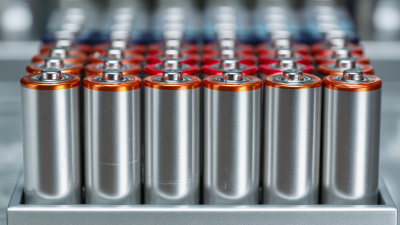
Prismatic cells often target grid storage. Pouch cells may suit lighter applications. The best format depends on space, weight, and cooling needs.
Buyers should request a safety data sheet, cell specifications, test evidence, origin details, and state-of-charge instructions. Packaging and declarations must match.
Incorrect descriptions, missing labels, or incomplete test documents can delay customs clearance. Even one wording error may hold a container.
Suppliers should explain installation, storage limits, emergency contacts, warranty steps, and local certification needs. Support quality is easy to underestimate.
Lower energy density can restrict heavy vehicles. Sodium-ion technology is promising, but some forecasts remain optimistic and need closer review.
This guide to the 2026 sodium-ion battery market explains why Sodium-Ion Batteries are gaining attention as a practical option for cost-sensitive, resource-conscious energy storage and mobility applications. It outlines how global buyers can assess suppliers by examining manufacturing experience, production capacity, research capabilities, product consistency, safety controls, and long-term service support. The article also introduces key sodium-ion technologies and chemistries, helping procurement teams match battery performance, cycle life, energy density, operating temperature, and application requirements.
It further provides a structured approach for comparing supplier pricing, quality systems, certifications, testing procedures, and customization capabilities. Global buyers will also learn what to consider when planning international shipping, documentation, regulatory compliance, packaging, installation guidance, warranty coverage, and technical support. By evaluating suppliers across both technical and commercial factors, buyers can reduce procurement risks and select reliable partners for scalable, safe, and cost-effective energy storage projects.