Sodium-Ion Batteries are catching the eye of folks looking for a different balance between cost, material availability, and how well they perform. But just because a certain chemistry looks promising doesn’t mean it’s automatically the right pick for every vehicle or backup system out there. Buying a sodium-ion battery should involve the same careful checking as with any other — things like voltage, capacity, how much it can discharge, operating temperatures, warranty details, and solid test data. Little details really do matter. Just looking at a label isn’t enough to know if it’ll fit your needs.
Dr. Jay Whitacre, a leading researcher in sodium-ion tech and the founder of Aquion Energy, has played a big role in moving the field forward. One key takeaway from his work is: 'Choose the chemistry based on the duty cycle, not just the buzz.' (That’s a paraphrase, not an exact quote.) It’s a good reminder to ask: what kind of load does the battery actually need to handle, and for how long? For something like a 12-volt Starting Battery, make sure to check the peak current and how it performs in cold weather. And, if you’re looking at a 12-volt sodium or sodium-ion battery, don’t forget to see if your charger supports its specific charging profile.
Sure, a 12V sodium-ion battery might sound like a straightforward replacement, but things like dimensions, terminal placement, and battery management features still matter. If you’ve got start-stop systems in your vehicle, they’ll have their own requirements, so double-check compatibility before making a move.
Here are seven practical tips to keep in mind — focus on real evidence like product docs, safety features, cycle life under real conditions, support from the supplier, and the total cost of ownership. Don’t just go by what the headlines say — compare test conditions and ask who actually did the testing. And it’s okay to remain a little skeptical — sometimes what’s published doesn’t quite match real-world usage, especially when factors like temperature swings, charging habits, or load vary. The best choice starts with clear, detailed specs and ends with a battery that actually fits what you need it to do.

Understand Sodium-Ion Battery Chemistry and Use Cases
Sodium-ion batteries move sodium ions between two electrodes as the cell charges and discharges. The chemistry differs from lithium-ion, even when the basic operating principle looks familiar. Many designs use hard carbon for the negative electrode, while cathode materials vary. That variation affects energy density, power, temperature response, and expected service life. Small differences matter. Compare complete battery specifications, not chemistry labels alone.
These batteries may suit stationary storage, backup power, or equipment where weight and compact size are less critical. A home storage unit, for example, may value dependable cycling more than maximum energy per kilogram. Performance still depends on the specific cell and system. Cold-weather output, charging limits, and usable capacity can differ between products. Ask for test conditions, not just headline figures.
When researching Sodium Ion Na Ion Batteries, check the stated cycle-life conditions, operating-temperature range, warranty, and safety documentation. Make sure the voltage and charging requirements fit your equipment. Request capacity data at the temperatures you expect to face. A low purchase price can look appealing, but replacement costs are easy to overlook. I would not assume every sodium-ion battery is automatically cheaper, safer, or better for the environment; those claims need evidence for the actual product.
Match Battery Capacity and Power to Your Needs
When comparing a Sodium Ion Battery Cell, check both its capacity and its continuous power rating. Capacity, usually listed in watt-hours, estimates how much energy the battery stores. Power, measured in watts, shows how quickly it can deliver that energy. They are related, but not interchangeable.
List the devices you expect to run and note their wattage. A 60-watt lamp used for five hours needs about 300 watt-hours, before conversion losses. Add a margin for inverter inefficiency, cold conditions, and aging. Small loads add up.
A fridge, for example, cycles on and off, so its average use may differ from its startup demand. Check both continuous and surge ratings against the appliance specifications. That matters.
A larger capacity will not help if the battery cannot supply enough power at once. Conversely, high output may be unnecessary for a small backup setup. Read the datasheet for usable capacity, discharge limits, and recommended operating temperatures. If the figures are unclear, ask the supplier for test conditions. I would avoid sizing too tightly; real use rarely follows a neat spreadsheet. Recheck your estimates after a week of use, because habits—and energy needs—can surprise you.
Check Voltage and Compatibility with Your Equipment
Before buying a sodium-ion battery, write down the voltage requirements in your equipment manual. A battery label may show nominal voltage, while your device specifies an operating range. Match both, not just the headline number. Many sodium-ion cells sit near 3 volts nominal, but pack voltage depends on cell count and design. Check the battery’s full-charge voltage and low-voltage cutoff in its datasheet. A mismatch can trigger inverter alarms, reduce usable capacity, or stress connected equipment. Voltage labels can mislead. Don’t guess.
Check the charger as carefully as the battery. Its charging profile must suit sodium-ion chemistry, and the battery’s management system should support the equipment’s current demands. Confirm continuous and peak current, connector polarity, and physical fit. A plug that fits is not proof of compatibility; that shortcut is easy to trust when the numbers look close. Also check the operating temperature range, especially if the battery will sit in a cold garage or a hot cabinet. If specifications are unclear, ask the supplier or a qualified technician before connecting the pack. A brief review now can prevent confusing faults later.
7 Tips for Buying Sodium Ion Batteries - Check Voltage and Compatibility with Your Equipment
| Tip | What to Check | Practical Guidance | Why It Matters |
| 1. Match the system voltage | Battery nominal voltage and the equipment’s permitted input-voltage range. | Compare the battery datasheet with the equipment manual. A “12 V” label alone does not confirm compatibility; check both nominal voltage and the pack’s full operating range. | Equipment may shut down, malfunction, or be damaged if the battery voltage falls outside its specified range. |
| 2. Check cell and pack voltage limits | Nominal voltage, maximum charging voltage, and minimum discharge voltage. | Sodium-ion cell voltage depends on the specific chemistry and design. Some cells have nominal voltages around 3.0–3.3 V, but use the exact limits in the battery manufacturer’s datasheet rather than assuming a universal value. | Voltage limits determine the safe charging and discharging range of the complete pack. |
| 3. Verify charger compatibility | Charger output voltage, charging profile, current limit, and required termination settings. | Use a charger explicitly approved for the exact sodium-ion battery model or pack specification. Do not assume a charger for lead-acid or lithium-ion batteries is suitable. | Different chemistries can require different charging limits and control behavior. |
| 4. Confirm series-cell configuration | Number of cells connected in series and the resulting pack voltage range. | For cells in series, pack voltage is based on the combined cell voltages. Confirm that both the pack’s maximum charged voltage and minimum operating voltage fit the equipment’s requirements. | A matching nominal voltage does not guarantee that the battery’s full voltage range is compatible. |
| 5. Check the battery management system | BMS voltage thresholds, current ratings, temperature limits, and communication requirements. | Confirm that the BMS is designed for the battery’s chemistry and cell configuration, and that its continuous and peak current ratings meet the equipment’s needs. | The BMS protects the pack, but its settings and ratings must suit the cells and application. |
| 6. Compare current and power requirements | Equipment’s continuous and startup current, plus the battery’s discharge rating. | Check the battery’s continuous and peak discharge specifications against the load. Include brief startup surges from motors, pumps, or inverters when checking peak demand. | A battery can have the correct voltage but still be unable to supply the required current safely. |
| 7. Check physical and system compatibility | Dimensions, terminals, polarity, temperature range, and any required communications or approvals. | Confirm that the battery fits securely, the terminals and polarity match, and the operating environment is within the datasheet limits. Check whether the equipment requires a specific battery type or certification. | Electrical compatibility is only one part of a safe, reliable installation. |
Review Safety Features and Product Certifications
When comparing sodium-ion batteries, inspect the safety system, not just the chemistry label. A battery management system should monitor cell voltage and temperature, then respond to overcharge, excessive current, or abnormal heat. Ask what protection is built into the pack and what happens if a sensor fails. Small details matter, such as clear warning labels and terminals protected from accidental contact.
Review the certification documents for the exact battery model you plan to buy. Check that the manufacturer, model number, and ratings match the product listing, and look for test reports from a recognized, independent body. Applicable standards vary by product type and market, so ask the seller which standards were tested and request the report number. Check the details. A logo alone does not tell you what was evaluated or whether the document covers the complete battery pack.
Also look for practical evidence of quality: traceable batch information, installation instructions, and stated temperature limits. If a seller cannot explain the protective features in plain language, pause before purchasing. Certifications reduce uncertainty, but they do not guarantee safe use in every setup. It is easy to feel reassured by paperwork too quickly; I would still compare the battery’s limits with the device and charging equipment it will actually use.
Compare Temperature Limits and Operating Conditions
When buying a Sodium Ion Battery Pack, check its temperature limits against the place it will actually operate. A battery in an outdoor cabinet faces different conditions from one in a climate-controlled room. Review the specified ranges for charging, discharging, and storage separately. Some packs restrict charging at lower temperatures even when discharge remains possible. Check the datasheet, not just a product summary.
Tip: Compare the full operating range, then ask whether it applies to the cells or the complete pack. A battery management system may reduce output or stop charging near a limit. Ask where temperature sensors are placed and whether the pack needs added ventilation or heating. Small details matter.
Consider both seasonal extremes and daily use. A pack beside a sunny wall may run hotter than local air readings suggest. Cold can limit available power, while sustained heat may speed up aging. Ask how performance changes across the stated range and what conditions affect the warranty. I would not treat one laboratory rating as a guarantee for every installation; real enclosures and duty cycles can differ.
Assess Lifespan, Warranty, and Supplier Reliability
A battery’s lifespan should be judged by more than a headline cycle count. Ask how many cycles were measured, at what temperature, and how much capacity remained afterward. Test conditions matter. A Cylindrical Sodium-Ion Battery may perform differently in a warm cabinet than in a cool warehouse. Compare expected service life with your actual charge and discharge pattern, not just laboratory figures. Also check whether the supplier defines end of life clearly. A vague claim can sound reassuring while offering little help with planning replacements.
Read the warranty before comparing prices. Look for its duration, capacity threshold, and remedy: repair, replacement, or credit. Check exclusions for storage, charging conditions, and installation, since these details can narrow coverage. Ask how claims are handled and whether replacement units are available locally. Supplier reliability also depends on traceable production records, consistent batch testing, and clear technical support. Request sample test reports and written delivery lead times. A polished brochure is not proof. It is easy to focus on the warranty length and overlook the claim process; that deserves a second look. If answers change between sales and technical staff, pause and ask for written clarification.
Compare Total Cost and Environmental Impact
Compare total cost per delivered kilowatt-hour, not the purchase price alone. Include usable capacity, round-trip efficiency, warranted cycle life, temperature controls, and replacement labor. A cheaper pack can cost more over time if it delivers fewer usable cycles. BloombergNEF’s 2024 survey reported an average lithium-ion pack price of $115 per kWh, down 20% from 2023. Treat that as a market benchmark, not a sodium-ion quote. Ask for an installed price and the assumptions behind the warranty.
Environmental comparisons need the same boundaries. The International Energy Agency’s Global Critical Minerals Outlook 2024 reported that the top three refining countries’ average share across key energy minerals rose from about 82% in 2020 to 86% in 2023. Sodium-ion batteries may reduce reliance on lithium, and some chemistries avoid nickel and cobalt. But impacts still depend on cathode materials, hard-carbon production, factory electricity, and transport. Not the whole story.
Request a lifecycle assessment in kilograms of CO2-equivalent per kilowatt-hour, and check its service-life and electricity assumptions. Compare recycling provisions and recycled content too. I would still check twice: a low-impact claim can look different when one supplier counts manufacturing only and another includes raw materials and end of life. These details are easy to miss.
Sealed 12V 12Ah Rechargeable Lithium Batteries: Insights from Fortune Business Insights’ Lithium-Ion Battery Market Report
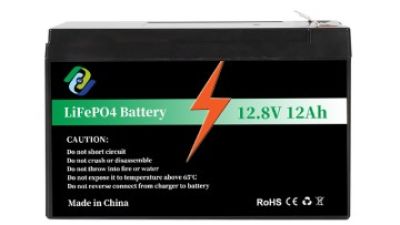
Fortune Business Insights’ lithium-ion battery market report highlights the sector’s expansion: the global market was valued at USD 54.4 billion in 2023 and is projected to reach USD 154.9 billion by 2032. This growth reflects rising demand across applications that need compact, rechargeable energy storage. For equipment designed around a 12V battery system, a 12.8V lithium battery can offer a practical balance of capacity and portability.
A 12V, 12Ah rechargeable battery with a nominal voltage of 12.8V stores 153.6Wh of rated energy and supports a maximum continuous discharge current of 12A. Its ABS housing measures 152 × 100 × 100 mm, while its approximate weight of 1.7 kg makes it easier to transport and install in space-conscious setups. The stated cycle life exceeds 4,000 cycles, making it suitable for repeated charging and discharging when operated within its specifications. Capacity, voltage, dimensions, and labels can also be customized for different project requirements, with OEM and ODM orders available.
Conclusion
Buying a Sodium-Ion Battery starts with understanding its chemistry and intended use. Consider whether it suits your application, then match its capacity and power output to your energy needs. Check the battery’s voltage and connection requirements to ensure it is compatible with your equipment. Before purchasing, review built-in safety features and relevant product certifications, and confirm that its temperature limits and operating conditions fit the environment where it will be used.
Look beyond the initial price when comparing options. Assess expected lifespan, warranty coverage, and the supplier’s reliability to understand the support available over time. It is also useful to compare total ownership costs, including installation and maintenance, alongside environmental considerations such as materials and expected service life. Weighing these factors together can help you choose a battery that is safe, suitable, and cost-effective for your needs.