request to quote
Leave Your Message
0%

So, when it comes to hunting down a solid sodium battery supplierto replace your old lead-acid ones, it's really not just about who's got the lowest price. You've got to dig into stuff like how long the Battery actually lasts in real cycles, how much usable capacity you're really getting, how it behaves when charging, the temperature range it can handle, and whether it's got decent battery-management smarts. Sure, a spec sheet gives you a starting point, but honestly, it's not the same as seeing how it performs out in the field.

CATL's chief scientist, Wu Kai, made a good point recently—he sees Sodium-Ion Batteries as a complement to lithium-ion, not a full-on replacement for every battery. As he put it: 'Sodium-ion batteries complement lithium-ion; they do not replace every battery.' And honestly, that distinction matters a lot. You can't just swap in any battery and expect it to work. It has to match the equipment's voltage, handle peak loads, work with the charging system, and keep up with the daily duty cycle. Even if a battery looks great on paper, it might still let you down in a cold room or when you're constantly pushing it hard.

Sure, China’s got tons of suppliers—which is great—but honestly, you can’t just take their claims at face value. You really need to dig in. Ask about test conditions, warranty terms, how they trace production, and whether they’ll actually support system integration. Also, ask for examples from similar applications, not just a shiny datasheet. Check everything carefully. And don’t get too excited by one amazing cycle-life number; that alone doesn’t tell the whole story.

Look, there’s no single “best” supplier out there for everyone—this intro isn’t going to settle that. No universal winner exists. Lead-acid batteries? They’re the familiar, well-supported option, sure. Sodium-based ones, depending on how they’re designed, might give you different trade-offs around weight, temperature, or upkeep. Even a solid, detailed comparison can only take you so far. The real starting point has to be your own operating data, not some bold marketing headline.
China Best Lead Acid Replacement Sodium Battery Supplier

What Is a Lead-Acid Replacement Sodium Battery?

A lead-acid replacement sodium battery is a rechargeable battery that uses sodium-ion chemistry instead of lead plates and sulfuric acid. During charging and discharging, Sodium Ions move between the battery’s electrodes through an electrolyte. Many designs use a carbon-based anode, though materials differ by manufacturer and model. No lead plates. No liquid acid.

The phrase “replacement” describes its intended role, not guaranteed compatibility. A sodium battery may fit the same application as a lead-acid unit, such as backup power or a low-speed vehicle, but its voltage range, charging profile, and control requirements can differ. Check the equipment specifications and battery manufacturer’s guidance before installation. The label can sound simpler than the engineering.

Compared with lead-acid batteries, some sodium-ion models offer useful cycle life and reduced reliance on certain constrained materials. Performance depends on cell design, temperature, load, and charging conditions, so broad comparisons can mislead. A Lead-Acid Replacement Lithium Battery uses a different chemistry; sodium-ion is not simply another name for lithium-ion. It deserves careful evaluation. Confirm capacity, dimensions, protection features, and charger compatibility for the actual system.

How Sodium-Ion Batteries Work as Lead-Acid Alternatives

A sodium-ion battery stores energy by moving sodium ions between two electrodes. During charging, ions pass through an electrolyte toward the negative electrode. During use, they travel back, while electrons flow through the external circuit and power the equipment. The process is reversible. Unlike a lead-acid battery, the cell does not rely on lead plates immersed in sulfuric acid. Its exact materials vary by design, so performance figures should be checked against the product’s specifications, not assumed from the chemistry alone.

For a Lead Acid Replacement Battery, this difference can mean less weight and a different maintenance routine. But it is not always a direct swap. A technician should confirm system voltage, charger settings, discharge demands, and battery-management requirements before installation. For example, a cart used outdoors may need reliable output on cold mornings, while a backup system may sit unused for weeks. Those conditions matter. Sodium-ion cells may tolerate some operating conditions well, but performance depends on the specific cell and pack. I would also check the enclosure, connection layout, and stated cycle-life testing. A promising chemistry still needs careful integration.

Key Differences Between Sodium-Ion and Lead-Acid Batteries

Lead-acid batteries are familiar, heavy, and often inexpensive to replace. Sodium-ion batteries use a different chemistry and can offer lower weight and longer cycle life in suitable applications. Their performance depends on cell design, temperature, and the battery management system, so the chemistry alone does not guarantee a better result.

A Lead-acid Replacement Battery must match the equipment’s voltage, charging profile, and discharge needs. Sodium-ion units may accept faster charging, but only when the charger and controls support their specifications. They also avoid lead, yet their purchase price and local availability can vary. In a workshop, check the battery compartment, cable connections, and low-temperature requirements before switching. Small details matter. I’ve seen replacement plans overlook charger compatibility; that is an easy assumption to make, and worth checking twice.

Tips: Compare usable capacity, not just amp-hours. Confirm the permitted charging voltage and operating temperature with the supplier. Keep the original battery’s dimensions and terminal layout handy when checking fit.

Common Applications for Sodium Battery Replacements

China Best Lead Acid Replacement Sodium Battery Supplier

Common Applications for Sodium Battery Replacements

Sodium batteries are being considered for stationary backup, telecom cabinets, solar storage, and selected low-speed vehicles. These sites often value cycle life, temperature tolerance, and material availability over compact size. A battery may sit in a roadside cabinet through hot afternoons, then provide power during an outage. Sodium-ion designs can suit such work, but performance varies by cell chemistry and system design. They are not always direct, drop-in replacements.

For warehouse equipment, mobility aids, and floor-cleaning machines, check weight, peak current, charging limits, and enclosure dimensions before switching. Battery Council International’s published industry figures put U.S. lead-battery recycling near 99%, a high benchmark for circular recovery. Sodium systems still need clear collection and recycling routes. That detail is easy to overlook. A replacement decision should compare lifetime cost, usable capacity, service conditions, and end-of-life handling—not chemistry alone.

Tips: Confirm the charger’s voltage profile and the equipment maker’s current requirements. Test one unit under real duty cycles before converting a fleet. Keep a temperature and charge log; small site differences can change results.

How to Evaluate Sodium Battery Suppliers in China

When evaluating sodium battery suppliers in China, look beyond price and advertised capacity. Ask for the cell chemistry, rated voltage, usable capacity, operating temperature range, and recommended charging profile. A sodium battery may not be a direct replacement for every 12v 12ah Lead Acid Battery, even when the dimensions match. Check connector placement, enclosure size, and whether the existing charger is compatible. Request test reports that show the conditions behind capacity and cycle-life figures. A tidy brochure is not proof; sample testing may reveal details that sales materials miss.

Tips: Ask for a sample and test it with your own equipment. Compare its voltage under load, charging behavior, and temperature rise with the supplier’s stated results. Request a written warranty, traceable production records, and clear answers about quality checks. If replies are vague, pause and ask again. That can feel slow, but it is useful.

During a factory review, observe how cells and finished packs are inspected, labeled, and stored. Confirm who handles technical support and how defects are assessed. No supplier can remove every risk, and a single sample cannot predict long-term performance. Keep your own test notes, including dates, load conditions, and measured results.

Manufacturing Standards, Safety, and Quality Assurance

For buyers considering a sodium battery as a lead-acid replacement, manufacturing discipline matters as much as advertised capacity. A capable supplier should document cell materials, production conditions, and batch traceability. These records help connect a finished battery to its test results. Ask how the manufacturer controls electrode coating, cell assembly, and formation. Small process variations can affect usable capacity and service life. Details matter.

Safety checks should reflect the battery’s intended use, not just a laboratory checklist. Testing may include overcharge response, external short-circuit protection, temperature behavior, vibration, and enclosure integrity. The battery management system should monitor cell voltage and temperature, then respond predictably to abnormal readings. Request test reports, including conditions and sample sizes. A pass mark alone tells little.

Quality assurance continues after production. Suppliers should inspect incoming materials, verify assembly steps, and retain samples from each batch. For products sold in different markets, confirm that testing and certifications match the application and destination. Do not assume a sodium battery is a direct, drop-in fit for every lead-acid system; voltage, charging limits, dimensions, and equipment compatibility need review. One weak point is easy to overlook: field conditions rarely match a test bench. Ask how customer feedback and failure investigations change later production.

Telecom Tower Backup: A 48V 160Ah NFPP Sodium Battery Guide Informed by GSMA’s Mobile Economy 2024 Report

Telecom networks depend on reliable power at every tower, including sites where grid supply is unstable or unavailable. As mobile services expand and operators work to improve network availability, backup systems must balance resilience, operating costs, and practical deployment. The GSMA’s *Mobile Economy 2024* report provides a useful industry context: continued growth in mobile connectivity makes dependable infrastructure increasingly important. A 48V 160Ah NFPP sodium battery can support telecom tower backup by storing energy for use during outages and helping maintain service continuity.

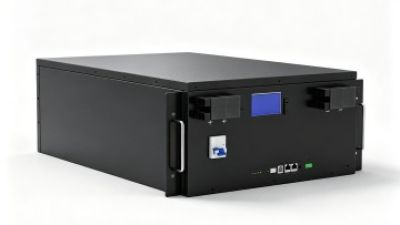
Designed for rack installation, this battery uses high-safety prismatic sodium cells and an integrated smart BMS. Wide-temperature operation and fast charging can suit demanding site conditions, while software locking, a gyroscope, and GPS provide multiple layers of anti-theft protection. An LCD screen and circuit breaker make status checks and operation more convenient. During capacity expansion, operators may be able to reuse existing batteries alongside additional units, reducing the need for full system replacement and helping control upfront costs. Its long service life can also support a more economical approach to backup power over time.

FAQS

What is a lead-acid replacement sodium battery?

It is a rechargeable battery that uses sodium-ion chemistry instead of lead plates and sulfuric acid. Sodium ions move between electrodes during charging and use.

Does “replacement” mean it fits every lead-acid system?

No. The term describes its intended use, not guaranteed compatibility. Check voltage, dimensions, charger settings, and equipment requirements.

How does a sodium-ion battery deliver power?

Sodium ions move through an electrolyte between electrodes. Electrons flow through the connected circuit and power the equipment.

Does it need the same maintenance as a lead-acid battery?

Its maintenance routine can differ because it does not use lead plates immersed in liquid acid. Follow the specific battery’s instructions.

What should I check before installation?

Confirm the system voltage, charging profile, discharge demands, connections, and protection features. A technician can help verify the setup. Small details matter.

Will it perform well in cold weather?

Performance depends on the cell, pack, temperature, and load. Check the product’s stated operating conditions before relying on it outdoors.

Is sodium-ion the same as lithium-ion?

No. They use different battery chemistries. Their performance and requirements should not be assumed to match.

How should I compare cycle-life claims?

Review the testing conditions and product specifications. Cycle-life figures can vary with temperature, charging, and use. I would not rely on one number alone.

Conclusion

This article explains how a Lead-Acid Replacement Sodium Battery can serve as an alternative for applications traditionally powered by lead-acid batteries. It introduces the basic principles of sodium-ion battery operation and compares the two technologies in areas such as chemistry, charging behavior, service life, maintenance needs, and operating characteristics. Readers will also find an overview of common uses, including backup power, energy storage, and equipment requiring dependable battery performance.

The article also offers practical guidance for evaluating sodium battery suppliers in China. It highlights factors such as product specifications, manufacturing capability, technical support, and the suitability of a battery for its intended application. Finally, it discusses the role of manufacturing standards, safety procedures, and quality assurance in helping buyers assess product consistency and reliability. Together, these topics provide a clear foundation for comparing options and making an informed supplier choice.
Jack

Jack

Jack is a dedicated professional at NaaS (Shenzhen) New Energy Technology Co., Ltd., where he leverages his expertise in marketing to drive the company's growth. With a strong background in the renewable energy sector, Jack possesses an impressive understanding of the company’s innovative products......
Previous Top 10 Energy Storage Manufacturers in the World