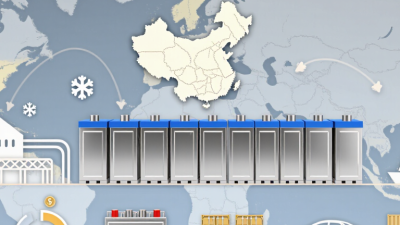
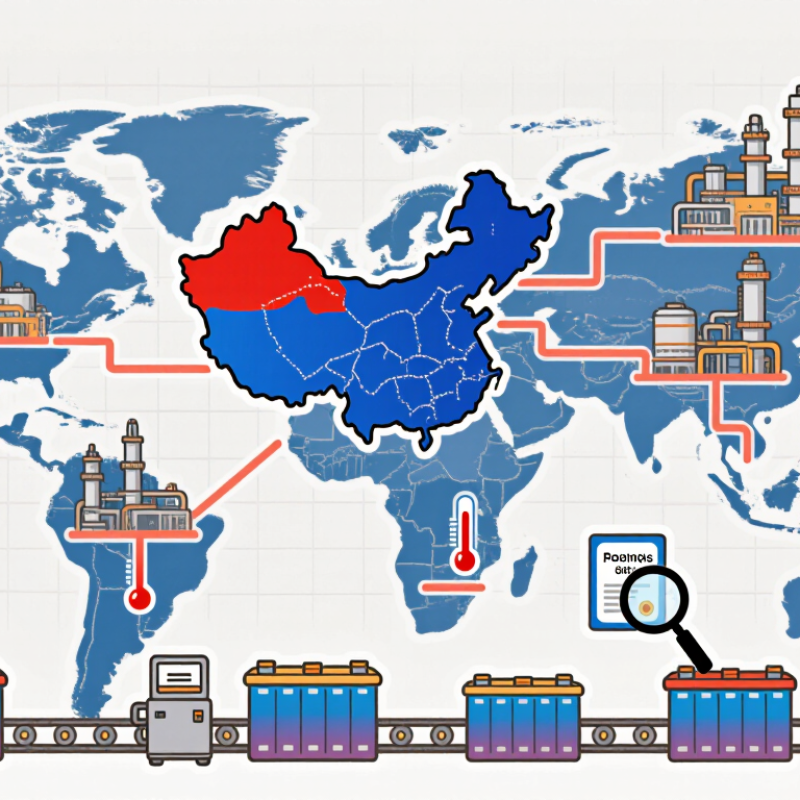
You know, China has pretty much become the hub for sodium-ion battery supply chains. But just because they announce capacity doesn’t mean the supply is actually reliable or ready to go. The International Energy Agency’s Global EV Outlook 2024 mentions that by 2030, the announced manufacturing capacity for Sodium-Ion Batteries could be around 140 GWh—most of that gonna be in China. That sounds promising, right? It shows some real momentum. But here’s the thing—just because those numbers look good doesn’t mean every one of those planned factories will be churning out batteries at full tilt or meeting the needs of export buyers. Sometimes things don’t go as expected, and that’s worth keeping in mind.
If you’re hunting for suppliers globally, don’t just focus on the price quotes — there’s a lot more to consider. Things like the chemistry used in the cells, how they perform over lots of cycles, what kind of operating temperatures they’re tested for, certifications, traceability, and whether production is consistent. Make sure to ask for test reports related to the exact cell model you’re interested in, and get clear details on warranties and how long it’ll take from sample to production. Just because a battery performs great in lab tests doesn’t mean it’ll behave the same way in, say, a cold warehouse or a high-demand backup system. Small details really do matter.
This guide takes a close look at Chinese sodium-ion battery suppliers and what buyers should be asking for before they put them on their shortlist. We consider how ready the products are, whether they fit your specific application, the manufacturing capacity, and the kind of support you can expect if you're working internationally. You may come across terms like “Sodium Ion Na Ion Batteries” in searches — but honestly, what’s more important is the actual specs, not just the name. Keep in mind that market data changes pretty fast, and public announcements can sometimes be hard to compare directly. Think of capacity claims as a starting point, not an absolute guarantee — always verify directly with the supplier to be sure.
Cell Chemistry and Formats: Layered Oxides, Prussian Blue, and Hard Carbon
For global buyers, chemistry matters more than a polished supplier brochure. In Sodium-Ion Batteries, layered oxide cathodes can provide strong energy density and practical voltage. Their performance may shift with humidity, particle size, and storage temperature. I have seen impressive results before cycling conditions were standardized. That mistake is expensive.
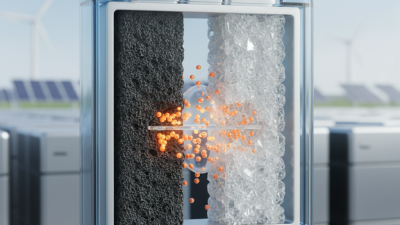
Prussian blue analogues use open crystal frameworks that support rapid sodium movement. They may offer good power performance and reduced dependence on constrained metals. However, moisture control remains critical. Ask suppliers for full-cell data, not only coin-cell curves. Check capacity retention, low-temperature discharge, gas generation, and batch consistency. A blue powder is not proof of reliability. It is only one clue.
Hard carbon is the usual anode choice, especially with layered oxide or Prussian blue cathodes. Its pore structure affects first-cycle efficiency, sodium inventory, and fast-charge behavior. Cell format also changes engineering risk. Cylindrical cells support automated assembly; prismatic cells use space efficiently; pouch cells reveal swelling earlier. Request samples in the intended format. Compare tab welds, electrolyte filling, pressure limits, and thermal results. Supplier claims deserve verification. Even careful buyers can miss an interface problem until pilot production exposes it.
China Best Sodium Ion Battery Suppliers for Global Buyers? — Cell Chemistry and Formats
The chart shows representative specific-capacity midpoints for the main sodium-ion electrode materials used in commercial and pilot-scale cell development. Layered oxides and Prussian blue analogues are cathode materials, while hard carbon is the dominant anode material.
Indicative capacity ranges: layered oxide cathodes approximately 120–180 mAh/g, Prussian blue or Prussian white cathodes approximately 100–160 mAh/g, and hard carbon anodes approximately 250–350 mAh/g. Cell formats are typically cylindrical, prismatic, or pouch; format selection affects packaging efficiency, thermal management, and system integration rather than the intrinsic electrode capacity.
Commercial Benchmark: CATL Announced 160 Wh/kg for Its First-Generation Cells
For global buyers, sodium-ion battery sourcing now depends on measurable cell performance, not factory claims alone. A leading manufacturer announced 160 Wh/kg for its first-generation Sodium-Ion Cells. This figure is a useful commercial benchmark, but it is not a complete purchasing decision.
At 160 Wh/kg, a 10 kWh battery pack would require roughly 62.5 kilograms of cells before adding modules, cooling, wiring, and casing. Pack-level energy density will be lower. Buyers should request third-party test records, production samples, cycle-life data, and low-temperature results. Ask for figures at 25°C and below zero. Laboratory performance can look different in a warehouse or delivery vehicle.
Supplier audits should also examine electrode consistency, moisture control, traceability, and warranty terms. Search traffic for “Batteries Sodium Ion Tiamat” may reveal market interest, yet keyword popularity does not prove cell quality. I would compare at least three suppliers using the same test protocol. That takes longer, but it exposes inflated comparisons. Some early data may remain incomplete. That matters. A reliable supplier should explain uncertainty instead of hiding it behind attractive charts. Sodium-ion cells may offer practical advantages for stationary storage and short-range mobility, though final pack economics still depend on materials, assembly yield, logistics, and local certification requirements.
China Best Sodium-Ion Battery Suppliers for Global Buyers? — Commercial Benchmark: First-Generation Cells Reached 160 Wh/kg
| Supplier Profile | Typical Cell Chemistry | Cell-Level Energy Density | Cycle Life at 80% Capacity | Operating Temperature | Fast-Charge Capability | Best-Fit Applications | Global Buyer Checkpoints |
| Automotive-Grade First Generation | Layered oxide cathode with hard-carbon anode | 140–160 Wh/kg | 3,000–4,000 cycles | Approximately −20°C to 55°C | Up to approximately 80% state of charge in 15–30 minutes under controlled conditions | Compact electric vehicles, hybrid systems, commercial mobility | Request third-party cell testing, low-temperature charging data, thermal-propagation results, and automotive qualification records. |
| High-Power Commercial Cell | Prussian white or Prussian blue cathode with hard-carbon anode | 100–140 Wh/kg | 4,000–6,000 cycles | Approximately −20°C to 50°C | Approximately 2C–4C, depending on thermal management | Forklifts, low-speed vehicles, backup power, industrial equipment | Confirm usable energy at the required discharge rate, electrolyte safety documentation, and calendar-life results. |
| Stationary Energy-Storage Cell | Layered oxide or Prussian-based sodium-ion chemistry | 100–145 Wh/kg | 3,000–6,000 cycles | Approximately −20°C to 55°C | Typically 0.5C–2C | Solar-plus-storage, microgrids, telecom backup, peak shaving | Evaluate round-trip efficiency, enclosure rating, battery-management-system compatibility, and warranty throughput. |
| Low-Cost Pack-Assembly Supplier | Sodium-ion prismatic cells using hard-carbon anodes | 90–130 Wh/kg | 2,500–4,000 cycles | Approximately −10°C to 50°C | Typically 0.5C–1C | Electric scooters, light utility vehicles, portable power systems | Verify cell traceability, consistency between production batches, pack-level protection, and replacement-cell availability. |
| Pilot-Scale Technology Supplier | Experimental layered oxide, Prussian-based, or mixed-polyanion chemistry | 80–150 Wh/kg | 1,500–4,000 cycles | Approximately −20°C to 45°C | Application-dependent; often below 2C | Research projects, demonstration fleets, customized industrial systems | Require pilot-line evidence, capacity-retention data, production ramp plans, intellectual-property status, and technical-support commitments. |
Commercial interpretation: Sodium-ion cells generally offer lower raw-material exposure and strong low-temperature potential than many lithium-ion alternatives, but their energy density remains below leading lithium-ion cells. Published values can vary by chemistry, cell format, test protocol, temperature, charge rate, and usable-capacity definition. Buyers should verify all specifications through independent testing and production samples.
China Supplier Map: CATL, HiNa Battery, and Zoolnasm
China’s sodium-ion battery supply map is expanding beyond a few well-known manufacturers. Global buyers can find large cell producers, specialist sodium-ion developers, and system integrators across eastern and southern China. Each group serves different needs. Large producers may offer stronger capacity and testing resources. Smaller specialists can respond faster to custom voltage, enclosure, or thermal-management requests.
Supplier evaluation should move beyond price. Ask for cell chemistry, cycle-life test conditions, operating temperature, and production traceability. A credible supplier should provide sample data, factory evidence, and clear warranty terms. Buyers should also check export packaging, battery transport documents, and independent safety testing. In my experience, a polished datasheet is not enough. Real performance can change under cold weather, high discharge rates, or repeated partial charging.
Tips: Request three sample batches, not one. Compare capacity at the same temperature and load. Inspect welds, terminals, labels, and pack protection. Keep written records of every test.
Sodium Ion Batteries Present And Future depends on honest data, stable materials, and practical system design. One concern remains. Some suppliers still present laboratory results as everyday performance. Buyers should challenge those claims and allow extra time for pilot testing.
Factory-Scale Evidence: HiNa’s Announced 1 GWh Sodium-Ion Production Line
A reported 1 GWh sodium-ion production line is meaningful factory-scale evidence, but an announcement is not the same as verified output. Buyers should distinguish planned capacity from commissioned equipment, production yield, and shipments. That distinction matters.
The International Energy Agency estimated global electric-vehicle battery demand at about 750 GWh in 2023 in its Global EV Outlook 2024. This offers useful scale, but it is not a direct market comparison: a sodium-ion line may serve different applications, including stationary storage. For Sodium Ion Rechargeable Batteries, the practical test is whether cells arrive consistently with documented capacity, cycle-life, and safety results. Ask for independent test reports, sample-to-production consistency, and delivery records.
On a factory visit, inspect more than the production-line nameplate. Check whether electrode coating, cell assembly, formation, and testing are running at commercial pace. Request utilization figures and clarify whether the 1 GWh figure describes annual capacity or a project target. A clean production floor looks reassuring. It proves little on its own. Public announcements rarely disclose sustained yield or customer acceptance rates, so buyers should treat those gaps as open diligence questions.
Buyer Due Diligence: Cycle Life, Temperature Range, Safety, and UN 38.3
For global buyers, sodium-ion cycle-life claims need their test conditions beside the headline number. Ask for cycles to a stated capacity-retention threshold, at a specified depth of discharge, charge rate, and ambient temperature. The IEA’s 2024 Batteries and Secure Energy Transitions report says battery storage capacity must grow sixfold to about 1,200 GW by 2030 in its net-zero scenario. That scale makes comparable test data more useful than a single impressive cycle count. A neat spreadsheet can still hide important gaps.
Check operating and charging temperature ranges separately. Request capacity and power data at both temperature limits, plus details on low-temperature charging restrictions and thermal management. Safety evidence should describe cell-level tests and pack-level controls; sodium-ion chemistry alone does not prove a system is safe. UN Manual of Tests and Criteria, subsection 38.3, specifies eight transport tests, including vibration, thermal testing, short circuit, and overcharge. UN 38.3 addresses transport safety, not long-term performance. Ask for the test summary and ensure it matches the exact cell or battery configuration being shipped. Small differences matter. Some supplier documents are incomplete; that deserves a careful follow-up, not an assumption of failure.
Application Fit and Cost Checks: Grid Storage, Mobility, and Backup Power
For grid storage, sodium-ion batteries may suit sites where space is available and long service life matters more than compact size. Compare usable energy, round-trip efficiency, and cycle-life data under stated temperature and depth-of-discharge conditions. Ask suppliers for test reports, not just headline figures. A cell rating alone does not predict system performance. That matters.
Mobility needs a closer weight and range check. Lower-cost cells can still raise vehicle costs if more capacity is needed for the same distance. For backup power, examine standby losses, recharge time, and reliable operation during cold mornings or heat waves. Compare quotations by installed cost per usable kilowatt-hour, including the battery management system, cooling, commissioning, and warranty terms. Request clear warranty limits and field-service arrangements. One detail is easy to miss: quoted cycle life may assume gentle operating conditions unlike a real site. The comparison is not always tidy. Ask suppliers to explain assumptions and show how performance changes with temperature, charging rate, and daily use.
A Safer Ride Ahead: The Super Safe 32140 10Ah Sodium-Ion Battery for Two-Wheelers
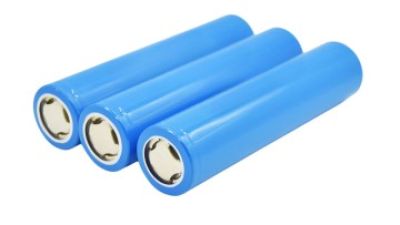
A safer ride begins with a dependable power source. The 32140 10Ah sodium-ion battery is designed for two-wheelers that require steady performance, practical energy storage, and long service life. With a nominal voltage of 3.0V and rated energy of 30Wh, this cylindrical cell provides a balanced solution for electric bicycles, scooters, and other compact mobility applications. Its layered oxide cathode supports stable operation, while the sodium-ion chemistry offers an alternative approach to conventional battery systems.
Built for demanding daily use, the cell delivers a maximum continuous discharge rate of 5C, helping support applications that need responsive power delivery. It offers more than 3,000 cycles at 70% depth of discharge, which can help reduce replacement frequency and support consistent ownership over time. Measuring approximately 140.5 mm in height and 32.5 mm in diameter, the 32140 format is suitable for battery packs where space and configuration flexibility matter. With no minimum order quantity for the first cooperation, it also provides an accessible starting point for evaluating sodium-ion power solutions for next-generation two-wheelers.
FAQS
They can provide strong energy density and practical voltage. Humidity, particle size, and storage temperature may shift performance. Standardize cycling conditions before comparing samples.
Their open frameworks support rapid sodium movement and may deliver good power. Moisture control is critical. Request full-cell data, not coin-cell curves alone. Check capacity retention, cold-weather discharge, gas generation, and batch consistency. Blue powder proves little.
Its pore structure affects first-cycle efficiency, sodium inventory, and fast charging. Compare anode results with the intended cathode and cell design. I would not judge it by capacity alone.
Cylindrical cells suit automated assembly, while prismatic cells use space efficiently. Pouch cells can reveal swelling earlier. Test samples in the format you plan to use.
Compare tab welds, electrolyte filling, pressure limits, and thermal results. Check that test conditions match your application. A small interface issue can appear late.
No. Announced capacity is not verified production. Ask whether the figure means annual capacity or a project target. Request utilization, yield, shipment, and customer acceptance records.
Check whether coating, cell assembly, formation, and testing run at commercial pace. A clean floor looks reassuring. It proves little by itself.
Global electric-vehicle battery demand was estimated at about 750 GWh in 2023. That is useful context, not a direct comparison. Sodium-ion lines may serve stationary storage instead.
Conclusion
Sodium-Ion Batteries are gaining attention as an alternative for applications where cost, resource availability, and reliable performance matter more than maximum energy density. Common designs combine layered oxide or Prussian blue cathodes with hard-carbon anodes, each offering different trade-offs in energy, power, durability, and materials sourcing. An early commercial benchmark of about 160 Wh/kg illustrates progress, while announced gigawatt-hour-scale production plans indicate that manufacturing is moving beyond small pilot projects. China’s supplier landscape includes established battery makers and specialist developers, so buyers should compare capabilities rather than rely on headline specifications.
Before selecting a supplier, verify cycle-life data under relevant operating conditions, usable temperature ranges, safety documentation, and UN 38.3 transport test evidence. Then assess whether the cell format and system design suit the intended duty: grid storage may prioritize service life and cost, mobility may require greater energy and power, and backup systems may value dependable operation and readiness. A practical purchasing decision should compare delivered system cost, warranties, production capacity, and application-specific test results alongside cell-level performance.