request to quote
Leave Your Message
0%

So, you’ve probably been wondering—who are the top Sodium Battery suppliers from China, especially if you're a global buyer? Well, it’s no longer just a theoretical question; it’s getting pretty real. The truth is, sodium battery tech is gaining traction because it relies less on lithium, nickel, and cobalt—those tricky, expensive materials. Plus, it’s actually pretty good in colder weather and can be a smart choice for cost-conscious energy needs.

According to the International Energy Agency, in 2023, the world’s demand for EV battery packs shot past 750 GWh. And guess what? China supplied over 80% of all the battery cells that year. The IEA’s latest report on critical minerals even highlights sodium-ion chemistry as a key strategy for diversifying our supply sources. Chinese firms like CATL, HiNa Battery, and others are really pushing forward with commercial sodium-ion systems. They’re now offering a bunch of 12V sodium batteries, sodium-ion variants, and start-stop batteries — you name it.

Then there’s Professor Jean-Marie Tarascon, a top expert in the field, who said something pretty interesting: “Sodium-ion batteries won’t replace lithium-ion batteries; they’ll actually complement them.” And there’s a point there. Sodium batteries could be cheaper, safer, and use more readily available resources. But, and it’s a big but, things like energy density, supply stability, certifications, and long-term real-world data are still catching up. So, at the end of the day, what really matters isn’t just fancy announcements—it’s real products that perform reliably.

This guide is here to help you navigate China’s leading sodium battery suppliers if you're shopping internationally. It dives into details like cell chemistry, how many charge cycles they last, their operating temps, actual production evidence, testing standards, and experience with exports. If you’re searching for terms like “12V starting battery,” “12V sodium battery,” “12V SIB,” or “12V start-stop battery,” remember: it’s not just about getting a cheap quote. You need clear, traceable specs and good tech support. While the market’s full of promise, it’s not perfectly transparent. Some companies might announce big capacities but never actually ship those cells. So, a bit of extra caution and thorough checking are definitely worth it.
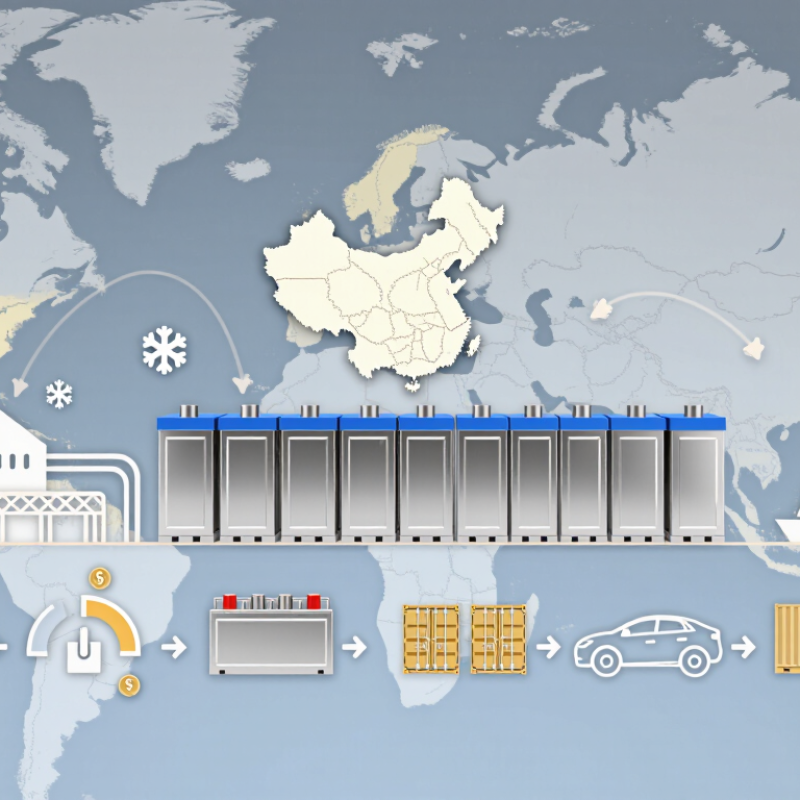
China Top Sodium Battery Suppliers for Global Buyers?

What Are Sodium Batteries and Why Are Global Buyers Considering Them?

A Sodium Battery stores energy by moving sodium ions between two electrodes. Unlike lithium systems, it uses sodium, an abundant element found in salt and mineral resources. This availability may reduce pressure on certain raw materials. That matters. Yet chemistry does not erase engineering limits.

Many sodium cells currently offer lower energy density than leading lithium alternatives. This can require larger battery packs for the same output. For stationary storage, weight matters less. For vehicles, space and driving range remain serious questions. Cold-weather performance also deserves careful testing, not optimistic assumptions.

Global buyers are considering sodium batteries for grid storage, backup power, and cost-sensitive equipment. A buyer may source samples from Chinese manufacturers, then compare capacity, cycle life, operating temperature, and safety data. Ask for independent test reports. Inspect production consistency. Review warranty conditions. Factory visits can reveal practical details, such as cell handling, moisture control, and final inspection procedures.

The supply chain deserves attention too. Sodium resources are widely available, but battery-grade materials still require controlled processing. Manufacturing scale is improving, although supply estimates may change quickly. I would not treat Sodium Battery technology as a universal replacement. Real-world results can differ from laboratory figures. That uncertainty is uncomfortable. It deserves honest measurement.

China Top Sodium Battery Suppliers for Global Buyers

What Are Sodium Batteries and Why Are Global Buyers Considering Them?

Sodium-ion batteries use sodium ions instead of lithium ions to store and release energy. Their use of more widely available raw materials can support supply-chain diversification, while their performance is increasingly suitable for stationary storage, low-speed electric vehicles and selected mobility applications.

How to read the chart: Sodium-ion cells generally offer lower energy density than mainstream lithium-ion chemistries, but they can be attractive where cost stability, resource availability, safety and low-temperature performance are more important than maximum driving range or compactness. Actual performance varies by cell design, materials, operating conditions and supplier specifications.

How to Evaluate China’s Sodium Battery Manufacturing Capabilities

China’s sodium battery manufacturing capacity should be judged beyond factory size. A reliable supplier must show stable electrode production, controlled material mixing, and consistent cell assembly. Ask for production records, not only polished presentations.

Check whether pilot samples match mass-produced cells. Measure capacity, cycle life, charging stability, and performance at low temperatures. Request third-party test reports and inspect laboratory equipment. Battery Sodium technology is developing quickly, so outdated data can mislead buyers. Factory cleanliness also matters. Dust control, moisture monitoring, and sealed storage areas reveal process discipline. Traceability should connect each cell to its material batch and production date.

Tips: Visit the facility when possible. Compare three sample batches. Review failure rates honestly. Ask how rejected cells are handled. Confirm applicable transport and safety certifications for your market. A supplier avoiding difficult questions may create larger risks later. Capacity claims can be optimistic. They deserve verification. Evaluate engineering staff, maintenance planning, and staff training, not just annual output. One weakness remains easy to miss: a factory may produce excellent samples but struggle with delivery consistency. Leave room for that possibility.

China Top Sodium Battery Suppliers for Global Buyers? - How to Evaluate China’s Sodium Battery Manufacturing Capabilities

Reference framework based on publicly disclosed sodium-ion battery technology and manufacturing practices. Actual specifications vary by cell design, production line, validation stage, and application.
Evaluation Dimension Typical China Manufacturing Capability Commonly Disclosed Technical Range or Fact What Global Buyers Should Verify
Commercial maturity Pilot production, commercial production, and early market deployment are all present in China. The sector is less mature than lithium-ion, but battery cells, modules, packs, and demonstration systems are available. Request evidence of continuous mass production, shipment history, customer acceptance, and production capacity allocated to export orders.
Cathode chemistry Manufacturers commonly develop layered oxide, Prussian blue or Prussian white analogue, and polyanionic cathode systems. Each chemistry involves trade-offs among energy density, moisture control, cycle life, cost, and low-temperature performance. Ask for the exact chemical composition, safety data, impurity controls, moisture limits, and independent test results.
Anode material Hard carbon is the dominant anode option for practical sodium-ion cells. Hard carbon can be produced from different biomass or carbonaceous precursors, and its performance depends strongly on pore structure and surface chemistry. Verify precursor consistency, first-cycle efficiency, supplier qualification, batch variation, and long-term availability.
Gravimetric energy density Manufacturers can produce cells suitable for stationary storage, low-speed mobility, backup power, and selected automotive applications. Publicly disclosed cell-level figures commonly fall around 90–160 Wh/kg, depending on chemistry, format, and test conditions. Confirm whether the figure is measured at cell, module, or pack level and obtain the complete discharge protocol and temperature conditions.
Volumetric energy density Prismatic, cylindrical, and pouch formats can be manufactured using equipment adapted from lithium-ion production. Volumetric energy density is generally lower than that of leading lithium-ion products because sodium-ion cells typically have lower cell-level energy density. Check pack dimensions, usable energy, inactive material percentage, cooling-system volume, and enclosure design.
Cycle-life capability Chinese manufacturers have demonstrated long-cycle cells for stationary and mobility applications. Commonly disclosed values range from approximately 2,000 to more than 4,000 cycles, depending on depth of discharge, temperature, charge rate, and end-of-life definition. Require cycle-test data using the intended operating window, not only laboratory half-cell or shallow-cycle results.
Low-temperature performance Low-temperature operation is a major development focus and can be advantageous compared with some lithium-ion chemistries. Products are commonly evaluated at temperatures near −20°C, with performance depending on chemistry, electrolyte, charge limits, and thermal management. Request capacity-retention, power-output, charging, and safety data at the minimum operating temperature.
Fast-charging capability Fast-charge designs are available, particularly for mobility and high-power applications. Public product claims often target approximately 15–30 minutes to reach a high state of charge, but this is not universal across all cells. Verify charge time, starting state of charge, ambient temperature, charger power, cooling requirements, and impact on cycle life.
Raw-material exposure Sodium-ion chemistry can reduce dependence on lithium and may avoid nickel and cobalt in selected cathode systems. Sodium compounds are widely available; however, other materials such as manganese, iron, aluminum, phosphorus, carbon, electrolyte salts, and separator films remain relevant. Review the complete bill of materials, material-origin risks, recycling route, and exposure to specialty electrolyte or separator supply.
Manufacturing-line compatibility Existing lithium-ion processes such as slurry mixing, coating, calendaring, assembly, electrolyte filling, formation, and aging can often be adapted. Cell production is not a simple drop-in conversion; electrode recipes, formation procedures, electrolyte systems, and quality controls require process-specific optimization. Audit the actual line, equipment utilization, yield data, formation time, automation level, and process change-control system.
Cell formats Prismatic, cylindrical, and pouch cells are technically feasible within China’s established battery manufacturing ecosystem. Format selection affects thermal behavior, pack integration, serviceability, energy density, and production yield. Confirm dimensional tolerances, terminal design, swelling limits, venting strategy, and compatibility with the buyer’s battery-management system.
Safety engineering Manufacturers can implement battery-management systems, thermal monitoring, over-current protection, and mechanical safety features. Sodium-ion cells are not risk-free; abuse tolerance depends on chemistry, separator, electrolyte, cell construction, and pack controls. Request nail penetration, crush, overcharge, external short-circuit, thermal propagation, and transport-test evidence where applicable.
Quality-control system Established factories can apply incoming-material inspection, in-line monitoring, formation grading, aging, and end-of-line testing. Manufacturing consistency is more important than laboratory peak performance for overseas buyers. Check ISO 9001 or equivalent systems, process capability data, traceability to cell level, defect rates, warranty policy, and corrective-action records.
Testing and certification readiness Export-oriented manufacturers can prepare documentation for international transport, electrical safety, electromagnetic compatibility, and market-specific requirements. Common requirements may include UN 38.3 transport testing, IEC battery standards, and regional product or environmental compliance rules. Verify that certificates apply to the exact cell or pack model, production site, chemistry, and revision level being purchased.
Pack and BMS integration Chinese suppliers commonly provide modules, battery-management systems, enclosures, chargers, and complete energy-storage packs. Sodium-ion voltage profiles and charging limits differ from common lithium-ion systems, so firmware and protection parameters require validation. Request communication protocols, balancing strategy, state-of-charge algorithm, firmware ownership, cybersecurity controls, and spare-parts support.
Production scalability China has strong upstream, equipment, cell-assembly, pack-integration, and logistics capabilities that can support scale-up. Announced capacity may exceed qualified or fully utilized capacity; commercial output should be distinguished from planned capacity. Compare nameplate capacity with actual monthly output, yield, utilization, equipment ownership, expansion timetable, and long-term supply commitments.
Total cost potential Sodium-ion products may offer cost advantages where lithium prices are high and lower energy density is acceptable. Cost competitiveness depends on production scale, hard-carbon cost, electrolyte formulation, yield, pack design, and raw-material prices. Evaluate total delivered cost per usable kWh, warranty cost, replacement interval, shipping classification, and installation expenses.

Which Types of Sodium Batteries Are Supplied by Chinese Companies?

Chinese companies supply several sodium battery types, mainly sodium-ion cells for stationary storage, low-speed vehicles, two-wheelers, and backup systems. The International Energy Agency reported that sodium-ion production remained below 1% of lithium-ion battery demand in 2023. The market is small, but production lines are expanding.

The most common cathode families are layered oxides, Prussian blue analogues, and polyanion compounds. IDTechEx identifies these as the main technical routes for commercial sodium-ion development. Layered oxide cells offer useful energy density. Prussian-based chemistry can reduce dependence on nickel and cobalt. Polyanion cells usually emphasize safety and cycle stability.

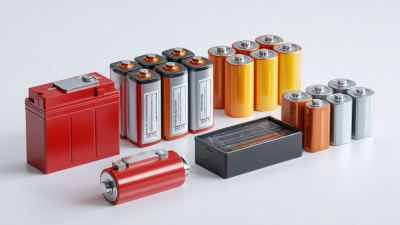
Suppliers also provide different formats. Prismatic cells suit container storage and electric vehicles. Cylindrical cells simplify automated assembly. Pouch cells help reduce packaging weight. Most commercial designs use hard carbon anodes, which are made from biomass, pitch, or other carbon sources. Quite practical.

The China Energy Storage Alliance reported rapid growth in China’s new energy-storage installations during 2023, creating demand for alternative chemistries. Yet sodium cells still face lower energy density than many lithium cells. Buyers should check cycle-life testing, low-temperature performance, thermal behavior, and sodium carbonate supply. A laboratory result is not a shipping specification. Some supplier claims also need independent verification.

How to Compare Leading Chinese Sodium Battery Suppliers

How to Compare Leading Chinese Sodium Battery Suppliers
Chinese sodium battery suppliers should be compared through verified performance, not attractive catalogue prices. The International Energy Agency’s Global EV Outlook 2024 notes that sodium-ion cells generally offer lower energy density than lithium-ion cells. However, they can perform better in cold conditions and reduce dependence on lithium, nickel, and cobalt. Ask for third-party test results showing capacity, cycle life, safety behavior, and performance at 0°C or below. A spreadsheet helps. It also hides problems.
Compare complete system costs, not only cell prices. BloombergNEF’s 2024 Battery Price Survey reported an average lithium-ion pack price of 115 US dollars per kWh. This figure is a useful market reference, but sodium battery quotations are not directly equivalent. Pack design, thermal management, warranty length, and production volume can change the final cost sharply. Request sample data at the same discharge rate, temperature, and state-of-charge range. Otherwise, the comparison is weak.
Supplier reliability needs physical verification. Review factory capacity, incoming-material controls, batch traceability, and documented quality procedures. Check compliance with IEC 62619 and UN 38.3 where applicable. Ask whether the quoted cycle life uses 80% depth of discharge or a gentler test. That detail matters. I would also inspect one production batch before signing a large contract. Reports can be accurate, yet samples may not represent daily output. This uncomfortable gap deserves attention.

What Certifications and Quality Standards Should Buyers Check?

When evaluating China’s sodium battery suppliers, buyers should verify certifications for the exact Sodium Based Battery model. A factory certificate alone proves little about a specific cell or module. Request current test reports, product specifications, and traceability records. Check whether an accredited laboratory issued the reports. ISO/IEC 17025 accreditation supports laboratory competence. ISO 9001 indicates controlled production processes, but it does not guarantee battery performance.

Review safety evidence carefully. Ask for capacity retention data, cycle-life results, overcharge protection, short-circuit testing, thermal abuse testing, and operating-temperature limits. Confirm that test samples match the production design, including electrode chemistry, casing, and battery management system. For shipping, request applicable transport test documentation and dangerous-goods packaging instructions. Requirements can change by destination. Do not rely on a generic “certified” claim.

Tips: Inspect the quality system through a remote or onsite audit. Match serial numbers with test reports. Check calibration dates for voltage, temperature, and capacity equipment. Ask how rejected cells are isolated. A supplier should explain its corrective-action process with evidence, not promises. Buyers should also verify relevant IEC, UL, or national standards with a qualified certification body, because lithium-focused standards may not automatically cover every sodium design. Some documentation may look complete, yet still leave gaps. That is worth challenging before payment.

How Do Pricing, Logistics, and Export Support Affect Purchasing?

For global buyers, pricing is only one part of choosing a reliable China-based sodium battery supplier. A Sodium Battery Pack may appear inexpensive, yet the quote can exclude enclosure design, battery management systems, testing, or export packaging. Ask for a line-by-line quotation. Compare cell capacity, cycle-life data, warranty terms, minimum order quantity, and delivery conditions. A cheaper offer is not always cheaper.

Logistics can change the purchasing decision quickly. Confirm production lead time, port availability, carton dimensions, and moisture protection before placing an order. Lead times matter. Suppliers should provide accurate commercial invoices, packing lists, safety data sheets, and applicable transport test documents. Check whether the shipping classification matches the battery design and destination rules. Documents can fail. One missing detail may delay customs clearance or increase storage costs.

Export support also shows a supplier’s practical experience. A capable team can explain HS code options, prepare technical files, answer customs questions, and coordinate with your freight forwarder. Request sample documents before payment. Ask for evidence. Video inspections, batch records, and pre-shipment photographs improve purchasing confidence. Still, buyers should avoid trusting polished promises alone. I would verify performance through independent testing when the order is significant. My own judgment can be imperfect, especially when comparing unfamiliar sodium chemistries. Clear communication, realistic schedules, and transparent corrective procedures often matter more than the lowest initial price.

What Should Global Buyers Include in a Sodium Battery Supplier Agreement?

A sodium battery supplier agreement should convert technical promises into measurable duties. The IEA’s Global EV Outlook 2024 reports that announced sodium-ion manufacturing capacity could exceed 100 GWh by 2030. It also notes lower energy density than mainstream lithium-ion systems. Buyers should therefore specify cell chemistry, nominal capacity, usable energy, cycle-life test conditions, and permitted capacity loss. Do not accept “long life” without temperature, depth-of-discharge, and charging-rate data.

The agreement should define delivery samples, factory audits, traceability, and independent acceptance testing. Require batch-level serial records, safety test reports, transport documents, and change-notification periods. IEC 62619 and UN 38.3 references can clarify industrial safety and transport expectations, but local requirements still need checking. Include warranty remedies for swelling, abnormal resistance, early capacity fade, and thermal events. A replacement formula is better than vague service language.

Price terms should separate cells, modules, software, tooling, logistics, and recycling support. The IEA’s Global Critical Minerals Outlook 2024 highlights continuing battery supply-chain concentration, so buyers should request realistic backup production plans. Yet sodium supply is not automatically risk-free. Hard-carbon quality, electrolyte consistency, and limited operating history may create surprises. I would include a pilot-order gate, quarterly performance reviews, and a right to pause scale-up after failed tests. The contract may still miss something. That is why test data, not confidence, should control acceptance.

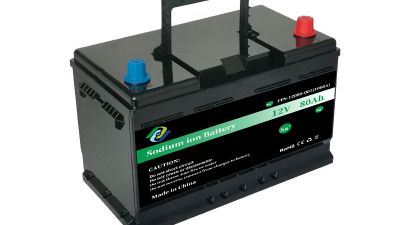
3000-Cycle 12V 80Ah Sodium-Ion Battery: Reliable Power for Car Stop-Start Systems

A 12V 80Ah sodium-ion battery is designed to provide dependable power for modern car stop-start systems, where frequent engine restarts place high demands on starting batteries. The U.S. Department of Energy reports that start-stop technology can improve fuel economy by approximately 4–5% in typical driving and by up to 8% in heavy traffic. With a rated energy of 960Wh and a working voltage range of 8–16V, this battery supports stable operation during repeated urban driving cycles.

Built with cylindrical sodium-ion cells and an ABS housing, the battery offers a stated cycle life of more than 3,000 cycles, helping reduce replacement frequency in demanding applications. Its 10.5kg design provides a practical balance between energy capacity and vehicle integration. The discharge temperature range of -40°C to 60°C also makes it suitable for regions experiencing severe winter cold or intense summer heat. The International Energy Agency’s *Global Critical Minerals Outlook 2024* emphasizes the value of battery technologies that can diversify material supply chains, an important consideration for the continued development of sodium-ion storage.

Suitable for passenger vehicles, commercial fleets, and other start-stop applications, this 12V system is engineered for consistent cranking support and repeated charge-discharge operation. A three-year warranty from the manufacturing date, together with OEM and ODM availability, supports flexible deployment for vehicle and energy-storage projects.

FAQS

What is a sodium battery?

A sodium battery stores energy by moving sodium ions between two electrodes. Sodium comes from widely available salt and mineral resources. That matters.

Why are global buyers considering sodium batteries?

Buyers are exploring them for grid storage, backup power, and cost-sensitive equipment. Wider sodium availability may reduce pressure on certain raw materials. It is not a universal replacement.

What is the main performance limitation?

Many sodium cells have lower energy density than leading lithium alternatives. They may need larger packs for equal output. Vehicle space and driving range remain important concerns.

Are sodium batteries suitable for cold climates?

Cold-weather performance requires direct testing. Buyers should measure charging, output, and capacity retention at low temperatures. Optimistic assumptions can mislead.

How should buyers evaluate a battery factory?

Review electrode production, material mixing, cell assembly, and production records. Compare at least three sample batches. Factory size alone proves little.

What factory details deserve inspection?

Check dust control, moisture monitoring, sealed storage, and final inspection procedures. Traceability should connect each cell with its material batch and production date. Small details matter.

Which technical data should buyers verify?

Measure capacity, cycle life, charging stability, safety behavior, and operating-temperature limits. Confirm samples match mass-produced cells. Laboratory results may not predict delivery consistency.

What certifications and documents should buyers request?

Request model-specific test reports, product specifications, traceability records, and transport documents. Use reports from competent, independent laboratories. A generic certification claim is insufficient.

How can buyers check quality control?

Match serial numbers with test reports and review equipment calibration dates. Ask how rejected cells are isolated. Also examine corrective-action records, not promises.

What risks can remain after a factory audit?

A supplier may produce excellent samples but struggle with stable delivery. Material processing and production estimates can change quickly. Leave room for uncertainty.

Conclusion

Sodium Battery technology is gaining attention from global buyers seeking cost-effective, safer, and more resource-flexible energy storage solutions. This overview explains why sodium-based systems are being considered as an alternative for stationary storage, backup power, low-speed mobility, and other applications. It also outlines how to evaluate China’s manufacturing capabilities, including cell chemistry, production scale, research capacity, automation, testing procedures, and supply consistency. Buyers can compare different product types, such as cylindrical, prismatic, and pouch cells, as well as complete battery packs and energy storage systems.

The article also highlights key factors for selecting a reliable supplier, including certifications, quality management, safety testing, warranty terms, pricing, logistics, export documentation, technical support, and after-sales service. A well-prepared supplier agreement should clearly define specifications, performance targets, inspection procedures, delivery schedules, payment terms, intellectual property responsibilities, warranty coverage, and dispute-resolution arrangements. By reviewing these elements systematically, international buyers can reduce purchasing risks and build stable, transparent, and long-term cooperation with suitable Chinese manufacturers.

Jack

Jack

Jack is a dedicated professional at NaaS (Shenzhen) New Energy Technology Co., Ltd., where he leverages his expertise in marketing to drive the company's growth. With a strong background in the renewable energy sector, Jack possesses an impressive understanding of the company’s innovative products......
Previous Top Battery Storage System Suppliers Worldwide