Picking the right Agv Batteryisn't really just a chemistry comparison. It's an operational call—uptime, safety, charging habits, and total cost all come into play. The International Federation of Robotics reported that transportation and logistics was still the largest professional service robot application in 2023. And that kind of growth? It puts more pressure on Battery Performance. Honestly, when a vehicle stops right by a loading bay, it can end up delaying the whole shift.
Honestly, when you're picking a battery, start with how it'll actually be used. Jot down the daily travel distance, payload weight, shift length, charging windows, and warehouse temperature—those real-world details matter. Lithium-ion systems can be a good fit if you want opportunity charging and less maintenance. Lead-acid batteries? They still work well for predictable routes and tighter upfront budgets. But in cold storage, you've got to look closely at charging limits and reduced capacity. A clean spec sheet alone? Yeah, that's not enough.
Battery expert Bob Galyen put it pretty simply: “There’s no one-size-fits-all battery.” And honestly, the practical evidence backs him up. The best Agv Battery really depends on the vehicle, the charger, the software, and the environment it’s working in. Interact Analysis also points to mobile robots as one of the fastest-growing automation segments. If anything, that trend makes energy planning even more important—not less. When you're looking at batteries, don't just focus on the headline numbers. Compare the stuff that actually matters: cycle life, usable capacity, warranty terms, thermal controls, communication protocols, and how easy—or painful—replacements are. And ask for real field data, not just shiny lab results. That eight-hour rating? It can shrink fast under heavy loads, lots of stops, or cold weather. Honestly, the small details are what make or break it.
Let’s be honest—some decisions are never going to be perfect. Forecasts shift, and workflows change too. That’s why a thoughtful pilot test really matters: it can surface problems that a spreadsheet just won’t catch. In this guide, I’ll walk you through how to evaluate Agv Battery options using real evidence, practical measurements, and a clear-eyed look at the long-term business risk.
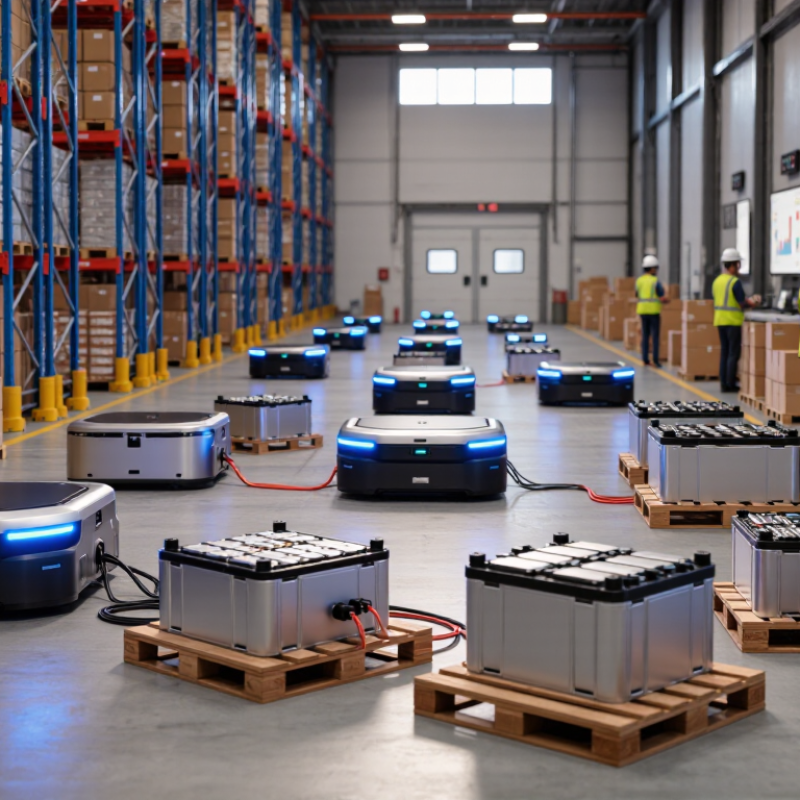
Choosing an AGV battery starts with the machine’s daily workload, not the battery catalogue. Record vehicle weight, payload, travel distance, speed, floor slope, and operating hours. A 500-kilogram load can change consumption sharply during ramps and frequent starts. Measure the real duty cycle across several shifts. Do not rely only on rated capacity.
Define the required voltage from the drive system, then calculate usable energy for each shift. Include acceleration, lifting, wireless equipment, and standby losses. An AGV covering 18 kilometers per shift may need more energy on uneven floors. Leave a practical reserve of 15 to 25 percent. Aging and cold conditions reduce output. An Agv Battery Pack should match the charger, connector, communication system, and charging windows. Very short charging windows need careful planning.
Review temperature range, enclosure protection, cell balancing, battery management, and service access. During warehouse trials, check voltage drop near the final quarter of discharge. That detail often exposes an oversized promise. Fast charging may reduce spare batteries, but it can increase heat without proper control. Ask for cycle-life evidence under your actual load profile, not only laboratory figures. Recheck the choice after two weeks of logged operation. The first estimate may be wrong.
Choosing the best AGV battery starts with chemistry, not voltage alone. A 48v Agv Battery can use different materials, each affecting runtime, charging, weight, and service life.
Lead-acid batteries remain practical for cost-sensitive operations.
They are familiar, widely supported, and tolerant of simple charging routines. However, they are heavy and usually need scheduled maintenance. Charging areas also require suitable ventilation. They fit AGVs with long idle periods and predictable shifts. They may struggle with rapid, opportunity-charging schedules.
Lithium-ion batteries deliver higher usable energy in a smaller, lighter package.
They support frequent short charges during breaks or task changes. Lithium iron phosphate chemistry can offer strong thermal stability and long cycle life. Yet, the battery management system must be reliable and correctly matched to the AGV. Upfront cost is higher.
Not always better.
Temperature limits, charger compatibility, and emergency procedures still require review.
Nickel-based options can perform across demanding temperatures, but their purchase and maintenance costs may limit adoption. In warehouse assessments, I compare daily travel distance, payload weight, charging windows, and floor temperature before selecting a chemistry.
Measure the aisle.
Also check battery access, because difficult replacement can increase downtime. My first comparison used only runtime, and that was a mistake. Total cost depends on labor, charging losses, replacement frequency, and productivity.
Test one vehicle under real shift conditions before committing to a fleet-wide decision.
Choosing an AGV battery starts with the workload, not the voltage label. List travel distance, payload, lifting height, stops, acceleration, and charging pauses. A vehicle moving 20 hours daily needs a different battery from one completing short warehouse trips. The 2024 Annual Industry Report by the Material Handling Institute found that 43% of supply-chain organizations already use robotics. More automation also means less tolerance for unexpected charging delays.
Calculate usable energy from the duty cycle. A 48v Agv Battery Pack rated at 200Ah stores 9.6 kWh nominally. If only 80% is regularly usable, and system losses reach 15%, practical energy is about 6.5 kWh. At a steady 3 kW load, runtime approaches 2.2 hours. Real routes are rarely steady. Cold floors, ramps, aged cells, and repeated lifting can reduce it further. Measure current during a complete shift when possible.
Leave operating headroom. Ten to twenty percent may protect schedule reliability, but excessive capacity adds weight, cost, and charging time. The International Energy Agency reported that battery prices continued falling in 2023, yet lower purchase cost does not remove duty-cycle risks. Opportunity charging may suit a multi-shift site better than a very large pack. Check charger compatibility, thermal behavior, cycle-life data, and maintenance records. A neat spreadsheet is not enough. Actual route logs can prove the estimate wrong.
How to Choose the Best AGV Battery for Your Business?
Evaluate Charging Methods and Facility Constraints
Start with the charging routine, not the battery catalog. Observe each AGV during a full shift. Does it return to a fixed station, or pause unpredictably between tasks? Opportunity charging suits vehicles that can recharge during short breaks. Overnight charging may work better for stable, single-shift operations. Battery swapping reduces waiting time, but requires spare batteries, lifting equipment, and trained staff. It also needs dedicated storage space.
Facility limits often decide the practical choice. Check the available electrical capacity before selecting high-power chargers. A small charging area may not support several vehicles charging simultaneously. Measure aisle widths, turning zones, and station clearance. Keep charging points away from forklift traffic and emergency access routes. Temperature matters too. Excessive heat can reduce battery performance and shorten service life. Cold conditions may increase charging time.
In real facilities, the neatest plan can fail. I have seen charging stations placed near busy doors, where dust and traffic caused repeated interruptions. A simple site walk can reveal more than a spreadsheet. Review ventilation, floor loading, cable protection, and network coverage for automatic chargers. Follow local safety requirements and the battery maker’s instructions. Do not assume every AGV can share one charging profile. Record actual charge times for two weeks, then compare them with production delays. The data may challenge your first decision. That is useful.
Charging Method, Replenishment Time, and Facility Constraint Evaluation
Overnight charging requires the least facility change but typically keeps an AGV out of service for about 8 hours. Opportunity charging reduces downtime during planned breaks, while battery swapping provides the fastest replenishment but requires spare batteries, storage space, and safe handling procedures. These are typical planning benchmarks and should be validated against the AGV duty cycle, battery capacity, charger rating, and available electrical infrastructure.
Battery size must match the AGV’s compartment, voltage, connector, and charging system. Measure the opening, not only the old battery. A small dimensional error can stop installation. The battery should also support the AGV’s peak current during acceleration, lifting, and ramp operation. Nominal capacity alone can mislead. A 48-volt battery with 200 amp-hours stores about 9.6 kilowatt-hours, but usable energy depends on discharge limits, temperature, and battery age. The International Federation of Robotics reported more than 113,000 transportation and logistics service robots were installed in 2023. This growth makes reliable battery selection increasingly important.
Weight affects traction, braking, energy use, and floor loading. Check the battery’s center of gravity against the AGV manufacturer’s limits. A heavier battery may extend operating time, yet it can increase wheel wear and reduce maneuverability. The battery compartment must also leave room for safe cable routing and ventilation. Tiny details matter.
Compatibility includes the battery management system, charger communication, connector polarity, and emergency shutdown circuit. ISO 3691-4 addresses safety requirements for driverless industrial trucks, while IEC 62619 covers safety for industrial lithium batteries. Confirm compliance before testing. Field logs are valuable: record route length, payload, stops, charging time, and remaining capacity. Real operation is often less efficient than the worksheet predicts. Leave a practical energy reserve, especially in cold warehouses or high-cycle shifts. A perfect calculation is still only an estimate.
Choosing an Agv Lithium Battery requires more than comparing purchase prices. Safety should begin with cell monitoring, temperature sensors, current protection, and a documented charging procedure. IEC 62619 addresses safety requirements for industrial lithium batteries, while NFPA 855 highlights separation, ventilation, and emergency planning for energy storage areas. A low-temperature charging lockout matters when vehicles enter cold rooms. Small oversights can become expensive.
Maintenance affects uptime and labor costs. The International Energy Agency reported that global lithium-ion battery prices fell 14% in 2023. Lower prices help procurement, but they do not guarantee lower ownership costs. Review charging cycles, warranty conditions, battery-swapping time, and the availability of diagnostic records.
In daily operations, a dashboard showing state of charge and temperature can prevent a vehicle from stopping beside a loading bay. That detail is easy to underestimate.
Calculate total cost over the battery’s working life, not only its invoice value. Include electricity, chargers, technician hours, replacement downtime, and end-of-life handling. BloombergNEF’s 2023 Battery Price Survey placed average pack prices at 139 dollars per kWh, yet site-specific costs can differ sharply. Faster charging may reduce fleet size, but it can increase thermal stress if poorly managed. I have seen maintenance teams trust battery percentages too much. Real usage data should challenge that habit. A pilot test across one shift can reveal charging losses, heat buildup, and unexpected operator behavior before a full deployment.
Start with the workload, not the voltage label. Record distance, payload, lifting height, stops, acceleration, and charging pauses. Measure a complete shift. Short trips need less energy than twenty-hour operations.
Multiply voltage by amp-hours for nominal energy. A 48-volt, 200Ah battery stores 9.6 kWh nominally. With 80% usable capacity and 15% losses, practical energy falls near 6.5 kWh. The estimate is not perfect.
At a steady 3 kW load, 6.5 kWh may provide about 2.2 hours. Real routes include ramps, lifting, cold floors, and repeated acceleration. These conditions can shorten runtime noticeably.
Leave roughly 10% to 20% operating headroom for schedule reliability. Excess capacity adds weight, cost, and charging time. More is not always better.
Opportunity charging fits vehicles with short, predictable pauses. Overnight charging may suit stable, single-shift work. Review actual break lengths before deciding. A neat plan can still fail.
Swapping can reduce waiting time during busy multi-shift operations. It requires spare batteries, lifting equipment, trained staff, and storage space. The process also needs clear handling rules.
Check electrical capacity, aisle widths, turning areas, station clearance, ventilation, floor loading, and cable protection. Keep chargers away from traffic and emergency access routes. Measure first.
Excessive heat can reduce performance and shorten service life. Cold conditions may increase charging time. Dust and busy doors can interrupt charging repeatedly. Site walks reveal overlooked problems.
Do not assume they can. Check charger compatibility, thermal behavior, cycle-life data, and maintenance records. Record actual charging times for two weeks. The data may challenge your first choice.
Choosing the best Agv Battery requires a clear understanding of your automated guided vehicle’s power demands, operating schedule, and working environment. Start by evaluating travel distance, load weight, duty cycles, and required runtime. Then compare suitable battery chemistries based on energy density, charging speed, service life, temperature tolerance, and maintenance needs. Battery capacity should support the workload without adding unnecessary weight or reducing vehicle efficiency.
Charging strategy is equally important. Consider whether the facility can support opportunity charging, scheduled charging, or battery exchange, and assess available space, electrical capacity, and workflow interruptions. Confirm that the battery’s dimensions, weight, connectors, and communication systems are compatible with the AGV. Finally, review safety features, inspection requirements, maintenance demands, and expected replacement frequency. The best choice is not simply the battery with the highest capacity, but the one that delivers reliable performance, practical charging, safe operation, and the lowest total ownership cost over its service life.