Finding the right Power Battery in 2026 isn’t just about comparing prices or advertised capacity — it’s a lot more nuanced. Buyers need to think about the chemistry, how it performs under real operating conditions, safety evidence, and long-term support. For example, a battery that works great in an electric bus might not cut it in a warehouse vehicle. Basically, the application really drives the specs you should be looking for.
Start by considering the duty cycle — keep track of daily energy needs, charging times, ambient temperatures, payload variations, and how much space you have to work with. From there, compare different chemistries like lithium iron phosphate, nickel manganese cobalt, or even sodium motive power batteries. Each one has its own pros and cons in terms of energy density, charging behavior, durability, and cost. Be sure to ask suppliers for real, verified test data — not just marketing promises. Check out the cycle-life results, thermal management capabilities, how the battery management system functions, and how well it’s protected against overcharging.
And don’t forget: evidence really matters. Ask for factory audit reports, quality control records, traceability documents, and relevant certifications. Make sure testing was done according to recognized standards, like UN 38.3 for transport and IEC or UL safety standards. Big brands like CATL, BYD, and Panasonic usually have solid technical info, but don’t rely solely on their name — always verify the product itself. Smaller suppliers can be worth considering, but you’ll want to carefully review their service capabilities.
Pilot testing is where the real surprises come out. A battery might hit all the targets in the lab, only to fall short during winter or after rapid charging cycles. Honestly, no option is perfect. Your procurement team should compare warranty terms, how quickly they’ll respond if something goes wrong, access to software, spare parts, and recycling plans. Keep in mind, total costs aren’t just about the battery — downtime, charger compatibility, installation, and training all add up. Once you start using the batteries in real-world scenarios, revisit your choices and gather data. A careful sourcing process takes into account the uncertainties, documents assumptions, and refines the specs before locking in a long-term deal.
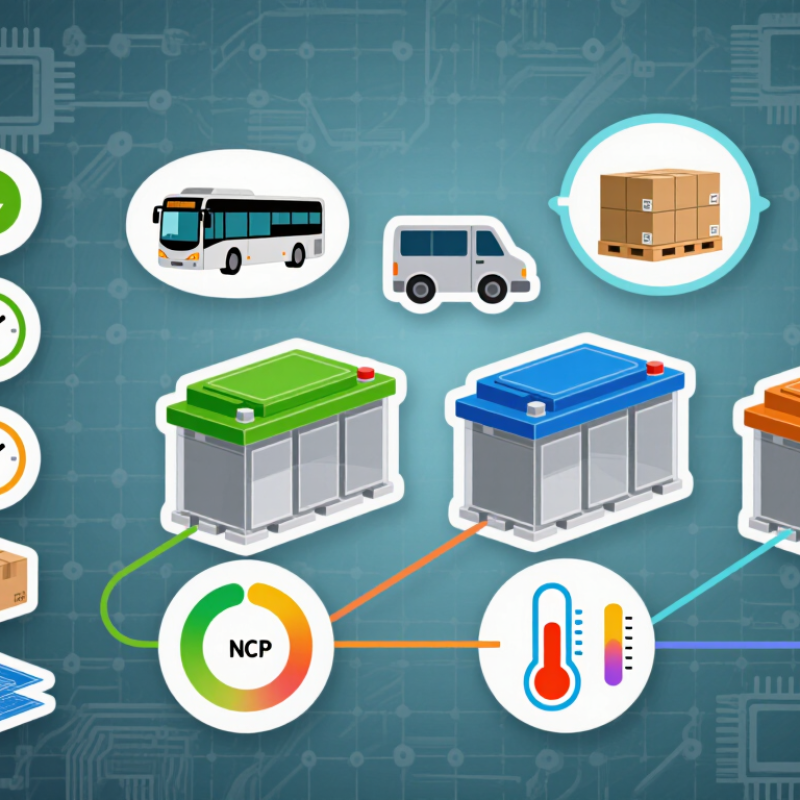
Before sourcing a power battery in 2026, define the application precisely. A delivery cart, medical device, and backup cabinet need different designs. Record the operating voltage, usable capacity, peak current, daily cycles, and expected service life. Include startup surges, not only average consumption. A motor may draw three times its rated current for several seconds. That detail can change the cell configuration and battery management system requirements. Also measure the installation space, connector position, weight limit, and charging time. Guessing here creates expensive redesigns later.
Tips: Build a simple load profile from real measurements. Log current during startup, continuous operation, idle periods, and charging. Test at the coldest and hottest expected temperatures. Ask for protection functions, communication protocols, test reports, and traceable safety documentation. Confirm whether the battery supports overcharge, over-discharge, short-circuit, and thermal protection. Small omissions matter.
Application conditions deserve equal attention. Outdoor equipment may face rain, dust, vibration, and uneven temperatures. Indoor systems may prioritize low noise and compact dimensions. Clarify transport rules, installation access, maintenance skills, and disposal planning before comparing quotations. During prototype reviews, teams often focus on capacity and overlook cable length or enclosure ventilation. I have seen that mistake delay testing. Your first requirement sheet will probably be incomplete. Revise it after field trials, especially when measured performance differs from the original estimate.
In 2026, battery sourcing requires more than comparing the lowest quotation. The chemistry affects performance, safety, service life, and total ownership cost.
Lithium iron phosphate batteries offer strong thermal stability and long cycle life. They suit stationary systems, including Solar Power And Battery Storage projects. Nickel-based lithium batteries provide higher energy density, but they need tighter thermal management. Lead-acid batteries remain affordable for smaller backup applications. However, their shorter cycle life can increase replacement costs.
Ask suppliers for tested capacity, operating temperature ranges, cycle-life conditions, and complete safety documentation. A battery rated for 5,000 cycles may reach that figure only under gentle conditions. Real workloads are harsher. Check charging speed, usable depth of discharge, enclosure protection, and maintenance needs. Compare cost per usable kilowatt-hour, not only the purchase price.
One sourcing mistake is trusting laboratory figures without reviewing field data. I have seen attractive specifications hide poor cold-weather performance. That deserves careful questioning.
Tips:
Request sample test reports. Confirm warranty terms in writing. Match the battery to daily load patterns. Check local installation requirements. Leave space for ventilation and service access. Do not ignore transport weight. A cheaper battery can become expensive when labor, replacement, and downtime are included. Recheck assumptions before signing.
A reliable power battery supplier should prove quality through records, not promises. During factory audits, I check incoming cell inspection, welding controls, electrolyte handling, and final testing. Small details matter. A clean production floor means little without traceable data.
Ask for batch-level test reports, failure rates, warranty procedures, and sample consistency results. For Solar Power Systems With Battery Storage, confirm the battery management system protects against overcharging, overheating, deep discharge, and cell imbalance. Review relevant certifications, such as IEC 62619, UN 38.3, and market-specific safety approvals. Certifications must match the actual model. Some suppliers present certificates for older products, which deserves careful questioning.
Manufacturing capacity also needs practical verification. Request monthly output, production lead times, equipment lists, and plans for component shortages. A supplier may claim high capacity while relying heavily on outside assembly. That is not automatically unacceptable, but it can weaken control. I prefer suppliers that share factory audit access and realistic quality data. No factory is flawless. I have seen strong suppliers miss documentation details, while attractive presentations concealed poor traceability. Leave room for follow-up inspections, because trust should grow from repeated evidence.
When sourcing a power battery in 2026, treat the datasheet as a starting point, not proof. Ask for rated capacity, operating voltage, peak current, charging limits, cycle life, and test conditions. These details often change the meaning of a specification. A 100 Ah rating may apply only at a gentle discharge rate. Under heavy loads, usable capacity can fall sharply.
Test samples under realistic conditions. Measure voltage stability, discharge capacity, internal resistance, charging temperature, and protection response. Use calibrated equipment. Record the ambient temperature and load profile for every test. Thermal behavior deserves close attention. A battery may perform well on a bench but heat quickly inside a compact enclosure. Testing at different charge levels can expose this weakness. No test catches everything.
Sample validation should compare several units, not one impressive sample. Run identical tests, then examine variation between cells, modules, and production lots. Check connectors, labels, housing quality, and firmware behavior where applicable. I once focused too heavily on capacity and overlooked inconsistent protection cutoffs. That mistake could have caused field failures. Keep raw data, photographs, and test dates in a traceable file. Ask the supplier to explain any result outside the agreed tolerance. If explanations remain vague, request another sample batch before approval. A low price cannot repair unreliable test evidence.
Purchase price rarely shows the real cost of a Power Storage Battery. BloombergNEF reported average lithium-ion pack prices of $115 per kWh in 2024. However, installation, cooling, software, replacement modules, and electricity losses can change the calculation. Lazard’s 2024 Levelized Cost of Storage analysis also shows that project economics vary sharply by duration and operating profile. A two-hour system should not be priced like a four-hour system.
Read the warranty beyond its headline years. Check the guaranteed end-of-term capacity, cycle limit, energy throughput, and operating temperature. A warranty promising 80% capacity may exclude frequent deep cycling. Ask whether capacity testing follows a defined procedure. Also confirm who pays for labor, transport, and replacement modules. Small wording matters. Very much.
Technical support deserves a measurable service level.Require remote monitoring, firmware control, fault-history access, and trained local technicians. The International Energy Agency notes that Battery Storage deployment is expanding rapidly, increasing the need for skilled operation and maintenance. Ask for response times, spare-parts availability, and escalation contacts. A cabinet showing an alarm at 2 a.m. needs more than a generic email address.
During one project review, we focused too heavily on efficiency and missed the cost of delayed troubleshooting. That mistake still deserves reflection. Compare annual service fees, expected degradation, downtime exposure, and disposal obligations in one ownership model. Insist on test records before signing.
Sourcing the right power battery in 2026 starts after the technical shortlist. A promising cell is not enough. Buyers should convert performance needs into contract language: usable capacity, cycle life, thermal limits, response time, and degradation guarantees. Request test reports tied to serial numbers, not broad laboratory claims. For Home Power Battery Storage, define installation conditions, monitoring duties, replacement timelines, and warranty remedies. A contract should also state what happens when delivered capacity falls below the agreed threshold. This detail is easy to miss.
Compliance checks need independent review before purchase orders are released. Verify transport documents, electrical safety evidence, environmental records, factory quality controls, and market-specific certification requirements. Requirements can change. Record the version and review date for every document. Visit or audit the production site when practical, checking incoming-material logs, sample retention, fire-safety procedures, and final inspection records. One audit does not prove future consistency, so add recurring checks. Long-term supply plans should cover forecast ranges, reserve inventory, tooling ownership, material substitutions, and communication during delays. A low price can become expensive when one component is unavailable.
Tips: Link milestone payments to verified inspections. Keep two qualified supply options where feasible. Test a pre-production batch in real installation conditions. Ask suppliers to disclose lead times honestly, including holiday shutdowns and shipping buffers. I would also document every assumption. Some plans look robust until demand rises 30 percent. That weakness deserves attention before signing, not after failure.
Finalize Contracts, Compliance Checks, and Long-Term Supply Plans
The chart maps key EU Battery Regulation milestones that should be built into battery sourcing contracts in 2026. Suppliers should provide carbon-footprint documentation, prepare for the 2026 performance-class requirement, support the 2027 battery passport, and maintain traceable recycled-content data for the 2028 declaration requirement.
Source: Regulation (EU) 2023/1542 and Regulation (EU) 2025/1561. Milestone years refer to the stated application dates of the relevant requirements.
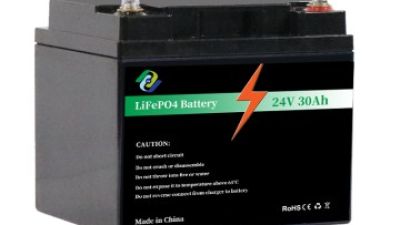
Recent energy-storage industry reports highlight the growing shift from lead-acid batteries toward lithium iron phosphate (LiFePO4) systems, driven by longer service life, lower weight, and improved operating efficiency. A 24V 30Ah LiFePO4 battery is designed as a practical replacement for traditional lead-acid units in backup power, mobility equipment, solar storage, and other low-voltage applications. With a nominal voltage of 25.6V and rated energy of 768Wh, it delivers stable power while weighing about 7.5kg—approximately one-third the weight of a comparable lead-acid battery.
Built with new Grade A cells, the battery supports a maximum continuous discharge current of 30A and offers more than 4,000 cycles under suitable operating conditions. Its ABS housing measures 197 × 165 × 169mm, allowing straightforward installation where space is limited. The sealed IP65 design helps protect internal components from dust and water splashes, making the unit suitable for selected outdoor installations. Compared with lead-acid technology, its maintenance-free operation can reduce routine service requirements and simplify system management, while the durable LiFePO4 chemistry provides consistent performance over extended use.
Request batch-level test reports, failure rates, and sample consistency records. Data matters more than polished promises. Check whether every report matches the proposed battery model.
Review incoming cell inspection, welding controls, electrolyte handling, and final testing. Look for traceable records beside the production line. A clean floor alone proves very little.
Ask for monthly output, lead times, equipment lists, and shortage-management plans. Compare claimed capacity with visible production activity. Outside assembly is not automatically poor, but it reduces direct control.
Check relevant standards, including IEC 62619 and UN 38.3. Confirm certificates match the exact battery model. Older certificates require careful questioning.
Confirm protection against overcharging, overheating, deep discharge, and cell imbalance. Request fault records and protection-test results. Ask how quickly serious alarms become visible.
Include installation, cooling, software, replacement modules, and electricity losses. Compare expected degradation and downtime exposure. A two-hour system should not be priced like a four-hour system.
Check end-of-term capacity, cycle limits, energy throughput, and operating temperature. Ask whether deep cycling changes the coverage. Confirm who pays for labor, transport, and replacement modules.
Require remote monitoring, firmware control, fault-history access, and trained local technicians. Ask for response times and spare-parts availability. An alarm at 2 a.m. needs more than a generic email address.
Treat one inspection as an early signal, not final proof. Schedule follow-up checks and review new production records. Strong suppliers can still miss documentation details.
Sourcing the right Power Battery in 2026 requires a structured evaluation that begins with a clear understanding of the intended application. Define key requirements such as energy capacity, power output, operating temperature, cycle life, size, weight, charging speed, and safety conditions. Then compare suitable battery chemistries according to performance, reliability, safety, environmental adaptability, and total cost rather than focusing on one specification alone.
A dependable supplier should demonstrate consistent product quality, sufficient manufacturing capacity, traceable processes, and relevant certifications. Before placing a large order, verify technical specifications through samples, laboratory testing, and real-use validation. In addition to purchase price, assess maintenance, transportation, replacement, warranty, and support costs over the battery’s full service life. Finally, complete compliance checks, clarify contract terms, define quality responsibilities, and establish a long-term supply plan that supports stable production, future demand, and continuous technical cooperation.