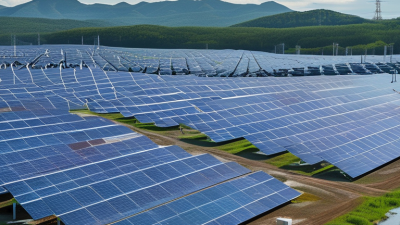
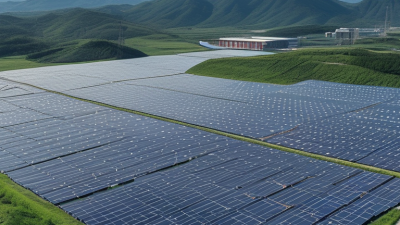
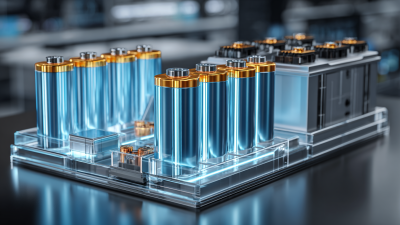
Energy Storage isn’t just a backup player anymore—it’s become a core part of how modern power systems actually work. Think about solar: panels crank out electricity around midday, but homes tend to need it most after the sun goes down. Storage steps in to bridge that gap, keep the grid steady, and make sure clean power doesn’t just go to waste.
So the International Energy Agency took a close look at that COP28 renewable-energy pledge in 2024, and their numbers are pretty striking. To hit the target, we'd need around 1,500 gigawatts of storage capacity by 2030 — with batteries accounting for roughly 1,200 of that. That’s a big deal. Sure, it points to a booming market, but not an easy one. Manufacturers have to juggle cost, safety, performance, and keeping supply chains solid. And at the end of the day, a single Battery cell doesn't add up to a reliable storage system.
Okay, so this guide looks at ten big-name manufacturers—CATL, BYD, Tesla, Sungrow, Fluence, Wärtsilä, LG Energy Solution, Samsung SDI, Panasonic, and EVE Energy. They're not all playing the same game, though. Some are really all about cells, while others focus on integrated systems, controls, or project services. That means you can't just compare them by production scale or headline capacity. You also have to dig into chemistry, cycle life, warranties, real-world deployment experience, and regional support. Sodium energy storage batterytech is getting some real attention lately, mostly as a possible complement to lithium-ion systems—though commercially, it's still pretty far from established. Honestly, the market is a bit all over the place, and rankings tend to shift as projects, prices, and tech keep evolving. In the sections below, I'll dig into what each company is offering and where their strengths might fit.
What Energy Storage Manufacturers Do
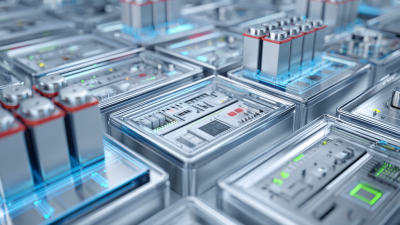
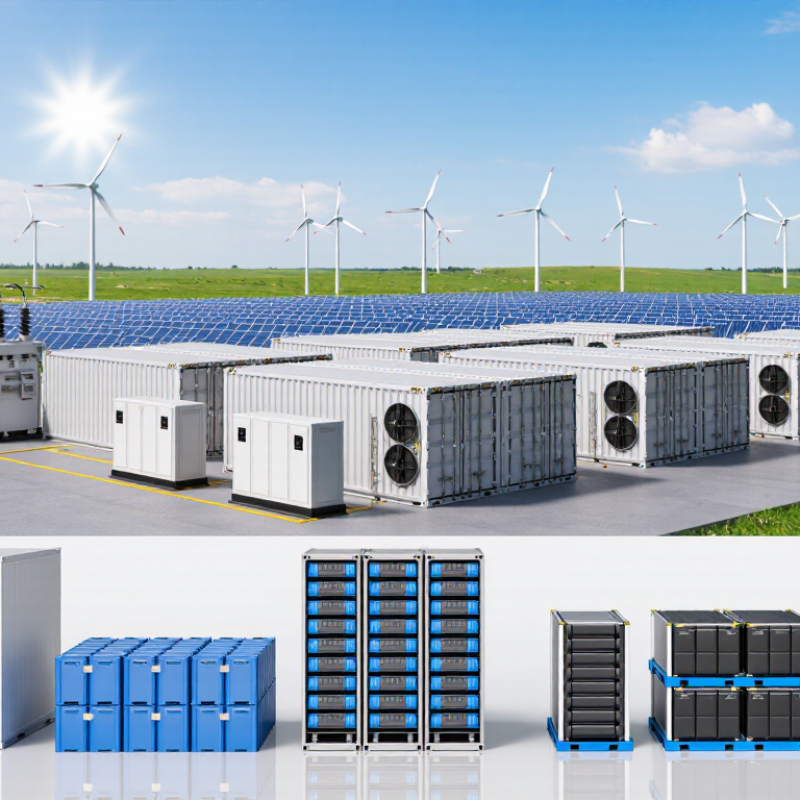
Energy Storage manufacturers turn cells, control systems, and safety equipment into complete systems for storing electricity. Their work goes beyond assembling batteries. They assess capacity needs, select components, and design enclosures that manage heat and moisture. A system may sit beside a solar array, inside a factory, or near a utility connection. Each setting calls for different power ratings and operating conditions.
Manufacturers also build battery-management systems that monitor voltage, temperature, and charge levels. These controls help balance cells and flag unusual readings before they become larger problems. Teams test performance, inspect connections, and document maintenance requirements. They may also provide software for tracking energy flows and planning service. Real-world conditions can still differ from test results. Dust, temperature swings, and changing usage patterns matter, and no design handles every site perfectly. That limitation deserves careful review.
Tips: Ask for clear data on usable capacity, operating temperature, warranty terms, and expected maintenance. Check how the system responds to faults, and confirm who provides technical support. Compare specifications with your site’s actual loads, not just its peak demand. Small details count.
Top 10 Energy Storage Manufacturers in the World — What Energy Storage Manufacturers Do
Energy storage manufacturers produce battery cells and assemble them into modules and packs. They may also integrate battery management systems and power conversion equipment into complete storage systems.
Typical Nominal Cell Voltage by Battery Chemistry
Nominal voltage is one basic specification manufacturers consider when designing storage products. These are typical values; actual specifications vary by cell design.
How the Top Manufacturers Are Selected
Selecting the world’s leading energy storage manufacturers requires more than comparing advertised capacity. A reliable assessment looks at product performance, manufacturing experience, and evidence from real installations. We examine usable energy, round-trip efficiency, operating temperature range, and warranty terms. Numbers matter. So does the fine print.
Project records can show whether systems perform consistently beyond a laboratory setting. We also consider independent certifications, quality-control practices, and the availability of technical support. A factory’s stated production capacity is not proof of dependable delivery, so it should be checked against completed projects and supply records. These checks are imperfect; public information varies, and some performance data is difficult to compare directly.
The evaluation also considers system integration, software monitoring, and maintenance needs. For example, clear fault alerts and accessible service procedures can reduce delays when a unit needs attention. We review how manufacturers address battery degradation, recycling plans, and product updates over time. No scorecard is perfect. Weighting factors involves judgment, and a strong result in one area cannot erase a weakness in another. Ranking criteria should be transparent, consistently applied, and updated as new field data becomes available.
Top 10 Energy Storage Manufacturers in the World – How the Top Manufacturers Are Selected
Selection framework: the criteria below describe how manufacturers can be assessed. The percentages are proposed editorial weights, not reported company results or an audited global ranking. No company or brand data is included.
| No. | Selection criterion | Weight | Evidence to review | Why it matters |
| 1 | Verified deployments | 18% | Commissioned projects, independently documented references, and disclosed system capacity. | Operating projects provide evidence beyond product announcements. |
| 2 | Shipment and installation scale | 15% | Clearly defined annual shipments or installed capacity, with units, period, and scope stated. | Comparable figures help distinguish commercial scale from announced capacity. |
| 3 | Product and application coverage | 12% | Documented offerings for relevant uses, such as grid-scale, commercial and industrial, or residential storage. | A clearly described portfolio shows which customer needs the manufacturer can serve. |
| 4 | Safety and compliance evidence | 12% | Applicable test reports, certifications, and regulatory documentation; examples include UL 9540, UL 1973, and IEC 62619 where relevant. | Requirements vary by product and market, so claims should be checked against the exact system and jurisdiction. |
| 5 | Performance transparency | 10% | Published usable energy, power, round-trip efficiency, operating limits, and test conditions. | Consistent, qualified specifications make products easier to evaluate fairly. |
| 6 | Warranty and lifecycle support | 8% | Published warranty terms, throughput or cycle conditions, degradation provisions, and service responsibilities. | Storage systems are long-lived assets, and warranty conditions affect project risk. |
| 7 | Manufacturing and quality controls | 8% | Documented production facilities, quality-management processes, and traceability practices. | Operational capacity and quality controls support reliable delivery and consistent products. |
| 8 | Geographic market coverage | 6% | Evidence of products, completed projects, or support capability across multiple markets. | Local codes, interconnection rules, and customer requirements differ between markets. |
| 9 | After-sales service capability | 6% | Published service channels, commissioning support, spare-parts arrangements, and monitoring or maintenance options. | Responsive support can reduce downtime throughout a system’s operating life. |
| 10 | Disclosure and source quality | 5% | Dated technical documents, consistent definitions, and claims traceable to reliable sources. | Transparent evidence helps reviewers verify claims and compare like with like. |
| Total proposed weighting | 100% | Use comparable, dated evidence and apply the same rules to every candidate. |
Key Technologies Used by Leading Manufacturers
Leading energy-storage manufacturers are refining cell chemistry, controls, and pack design rather than relying on one breakthrough. Lithium iron phosphate cells are widely used for stationary systems because they balance cost, cycle life, and thermal stability. Nickel-rich chemistries offer higher energy density, but their heat management demands are greater. Chemistry matters.
The International Energy Agency’s Batteries and Secure Energy Transitions report records 42 GW of new battery storage capacity in 2023, about 130% more than in 2022. That growth makes battery management systems essential. They monitor cell voltage and temperature, balance charging, and flag faults before a small mismatch spreads. Liquid cooling can help maintain even temperatures across tightly packed racks. Yet cooling adds components, maintenance, and energy use.
For longer storage periods, manufacturers are also developing flow batteries, sodium-ion cells, and hybrid systems. The U.S. Department of Energy’s Long Duration Energy Storage Liftoff report describes long-duration storage as systems providing at least 10 hours of discharge. In practice, choosing technology depends on use: a solar farm shifting midday power may need different equipment than a grid balancing demand overnight. Solar Energy Battery Storage is not a single product category. Costs, climate, and operating cycles matter, and forecasts can miss real-world maintenance burdens. The field is advancing, but not every promising design is commercially proven.
Global Markets and Manufacturing Capabilities
Global energy-storage manufacturers compete on more than battery-cell volume. Buyers also need dependable output, system integration, safety testing, and service support close to project sites. The International Energy Agency’s 2024 report, Batteries and Secure Energy Transitions, records 42 GW of battery-storage additions in 2023—more than twice the previous year. That growth raises the value of factories that can deliver consistent products at scale. Yet announced capacity is not the same as proven production. I would not rank a manufacturer by factory plans alone.
Tips: Compare usable energy, cycle-life warranties, delivery times, and local service. Ask how output is tested. Check the details.
Global manufacturing capability varies by region, supply-chain access, and experience integrating storage with solar, wind, and power grids. A nearby assembly plant may shorten shipping, but it does not guarantee reliable cells or skilled technical support. Look for independently verified performance data and transparent warranty terms. Even then, forecasts can miss real-world delays; a tidy spreadsheet cannot reveal every factory bottleneck. The IEA’s figures describe a rapidly expanding market, not a guarantee that every supplier can meet a project’s schedule.
Factors to Compare When Choosing a Manufacturer
Choosing a manufacturer means comparing the complete system, not just its battery-cell price. Define the job first: daily solar shifting, peak support, or backup each creates different cycling and power demands. Check usable energy at the grid connection, round-trip efficiency, response time, and degradation under your site’s temperatures. Small details matter. A lot.
The IEA’s 2024 report, Batteries and Secure Energy Transitions, projects 1,200 GW of battery storage by 2030 under a net-zero pathway. That scale makes factory capacity, delivery schedules, and field-proven performance important comparison points. IRENA reported battery-storage project costs fell 89% from 2010 to 2023. Falling prices help, but quoted totals may omit commissioning, software, augmentation, or long-term service. Compare the same scope.
For a Bess Energy Storage System, request independently tested performance curves and warranty terms tied to throughput, not just years. Ask who monitors alarms, stocks replacement parts, and responds when a site sits far from support. Review thermal management, safety testing, controls interoperability, and cybersecurity updates. Then check references from projects with similar climates and duty cycles. A polished datasheet is not field evidence. I’d still treat forecast lifetimes cautiously; actual cycling and heat can expose gaps a sales model misses.
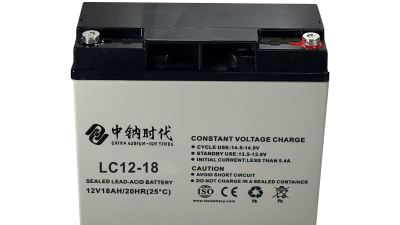
Reliable Energy Storage with a Maintenance-Free 12V 18Ah AGM Battery
A reliable energy storage system should deliver steady power without demanding frequent attention. This sealed 12V 18Ah AGM battery is designed for convenient, maintenance-free operation. Its absorbent glass mat holds the electrolyte in place, helping make the battery leak-resistant when used and installed as directed. The sealed construction also means there is no need to add water during normal use, reducing routine upkeep for a range of compatible backup and standby applications.
Its maintenance-free performance comes from oxygen recombination inside the battery. Oxygen produced at the positive plates travels through the porous glass-fiber mat toward the negative plates, where it recombines and is converted back into water. This internal process helps preserve the electrolyte and supports dependable operation over time. With a compact form and rechargeable 12V, 18Ah capacity, it offers a practical energy storage option for equipment that requires a steady supply of backup power.
Conclusion
Energy Storage manufacturers design and produce systems that capture electricity for later use, supporting homes, businesses, utilities, and industrial operations. This overview explains how leading companies are assessed, considering factors such as product reliability, safety, research and development, production capacity, customer support, and experience across different applications. It also introduces the characteristics commonly found among the world’s top manufacturers without relying on brand names.
Leading manufacturers use technologies such as advanced batteries, power-conversion equipment, monitoring software, and integrated control systems. Their global reach depends on manufacturing capacity, supply-chain resilience, regional expertise, and the ability to serve varied market needs. When comparing providers, buyers should examine system performance, lifespan, warranty terms, scalability, safety features, service availability, and total ownership costs. These considerations can help organizations choose a solution suited to their operational goals and long-term energy requirements.