You might’ve heard about how lithium batteries are changing the game for backup power, marine gear, RVs, and off-grid setups. And honestly, you can see it in action: a 12-volt lithium battery can be more than half the weight of a similar lead-acid one, and it gives you more usable capacity without that annoying voltage drop. It’s pretty impressive.
Industry numbers back this up too. The International Energy Agency said global battery demand hit around 750 GWh in 2023—an increase that's pretty significant from the year before. Meanwhile, BloombergNEF reports that in 2024, average prices for lithium-ion Battery Packs dropped to about $115 per kWh. That’s huge, but it’s not a free-for-all—things like installation conditions, charging controls, safety features, and replacement costs still play a big role in whether lithium batteries really make sense for you.
Remember Nobel laureate John B. Goodenough’s famous words: “The battery is the key to the electric car.” That’s true beyond just vehicles, though. When choosing a replacement battery, it’s not just about hype or capacity numbers. It has to fit the application—whether it’s LiFePO4, NMC, lithium titanate, or others—each has its own sweet spot when it comes to safety, power, lifespan, and price.
In this guide, we’ll look at the Top 10 types of lead-acid replacement lithium batteries, based on real-world specs and trusted sources like the International Energy Agency, BloombergNEF, and UL Solutions. That said, everything isn’t perfect—how it performs in the real world really depends on factors like wiring, climate, how you charge it, and who installed it. So, don’t just go by the label—there’s more beneath the surface.
Lithium batteries are replacing traditional lead-acid batteries because they store more usable energy in less space. A lithium pack can often deliver consistent voltage until nearly empty, while lead-acid voltage gradually declines. This difference keeps lights, motors, and control systems operating more reliably.
Less routine work.
In practical installations, lithium batteries commonly serve solar storage, recreational vehicles, marine equipment, forklifts, backup power, telecommunications, mobility devices, electric carts, starting systems, and industrial tools. Lithium iron phosphate suits many deep-cycle applications because it offers strong thermal stability and a long service life. Lithium titanate performs well where rapid charging and cold-weather operation matter. Other lithium chemistries may provide higher energy density, but their safety requirements demand closer engineering control.
Weight also changes daily handling. A lithium battery may reduce lifting effort and free valuable cabinet or vehicle space. It accepts charging more efficiently, which can reduce generator runtime and wasted energy. However, lithium is not automatically better in every situation. A battery management system, correct charger, ventilation design, and temperature protection remain essential. Poorly matched components can shorten service life or create avoidable hazards.
That matters.
Lead-acid batteries still suit some low-cost, lightly used systems. Their purchase price can look attractive, although replacement frequency and maintenance may alter the long-term calculation. The better choice depends on load patterns, climate, charging equipment, installation limits, and safety procedures. Industry specifications should be checked before conversion, not after problems appear.
The Ten Main Lithium Battery Types for Lead-Acid Replacement
Lead-acid replacement projects usually begin with LiFePO4, also called lithium iron phosphate. It offers stable thermal behavior, long cycle life, and strong daily performance. Lithium nickel manganese cobalt oxide suits compact systems needing higher energy density. Lithium nickel cobalt aluminum oxide provides similar density, but requires careful thermal management. Lithium manganese oxide delivers good power in short bursts. It can lose capacity faster under heavy cycling.
Lithium cobalt oxide is energy-dense, yet less attractive for demanding stationary storage. Lithium titanate oxide accepts rapid charging and performs well in cold conditions. Its cost and lower energy density remain practical limitations. Lithium manganese iron phosphate improves energy density while retaining much of the stability associated with phosphate chemistry. Lithium-polymer batteries provide flexible packaging, although their pouch cells need firm mechanical protection. Lithium-metal batteries promise higher capacity, but many applications still depend on developing safety controls. Solid-state lithium batteries may offer improved safety, but commercial availability varies greatly.
A battery assessment should examine voltage, peak current, enclosure space, temperature, and charging equipment. A 12-volt replacement may still require a compatible battery-management system. I have seen installation plans fail because cable losses were ignored. Small details matter. Cold charging also deserves attention. The term Lead-Acid Replacement Sodium Battery is sometimes used for emerging sodium-based alternatives, but sodium batteries are not lithium batteries. They may suit lower-cost, moderate-range storage where weight is less important. Performance claims should be checked against test data, not attractive labels.
Choosing a Lead Acid Replacement Battery requires more than comparing voltage and capacity. Lithium chemistries behave differently under heat, cold, vibration, and repeated charging.
Lithium iron phosphate, or LiFePO4, is widely valued for strong thermal stability and long cycle life. It suits marine systems, backup power, and daily-use equipment. Its energy density is lower than some alternatives, so the battery may need more space.
Lithium nickel manganese cobalt oxide, or NMC, stores more energy in a smaller enclosure. That advantage helps electric tools and compact vehicles. However, it demands careful thermal control and a properly configured battery management system.
Lithium titanate, or LTO, performs well during rapid charging and cold-weather operation. It can also tolerate extensive cycling, but its lower energy density and higher cost limit some applications.
Lithium manganese oxide offers good power output, while nickel cobalt aluminum oxide can deliver high energy density. Both require disciplined temperature monitoring.
A neat ranking is tempting, but it can mislead. Real performance depends on cell quality, wiring, ventilation, charging limits, and load patterns. I would not call any chemistry risk-free. A small workshop test can reveal issues that a specification sheet misses, such as voltage sag under motor startup or reduced capacity below freezing. Matching the charger and BMS is essential. Safety begins with compatibility.
Replacing lead-acid systems requires more than matching terminal voltage. A Lead-acid Replacement Battery must also fit the enclosure, cables, charger, and mounting points. Common form factors include sealed box packs, slimline modules, rack units, and drop-in cases. A drop-in 12V pack may fit a small mobility device, while 24V and 36V versions suit commercial equipment. Larger solar storage systems often use 48V or 51.2V modules, typically built with lithium iron phosphate cells. The 51.2V option usually contains sixteen 3.2V cells in series. It is a practical detail, but installers sometimes overlook it.
The International Energy Agency reported in Batteries and Secure Energy Transitions (2024) that global battery storage capacity must increase sixfold by 2030. That growth supports wider voltage choices, yet compatibility remains uneven. A 48V battery may not work safely with an older charger designed for lead-acid charging curves. Check charge voltage, low-voltage cut-off, continuous current, and battery-management communication before installation. Rack batteries improve service access. Slim packs save space. Drop-in cases reduce rewiring. None is automatically superior. In field replacements, I have found that a slightly smaller pack can outperform a larger one when airflow and cable routing are better. This is easy to underestimate. Independent testing data, including cycle life at the actual operating temperature, should guide the final selection.
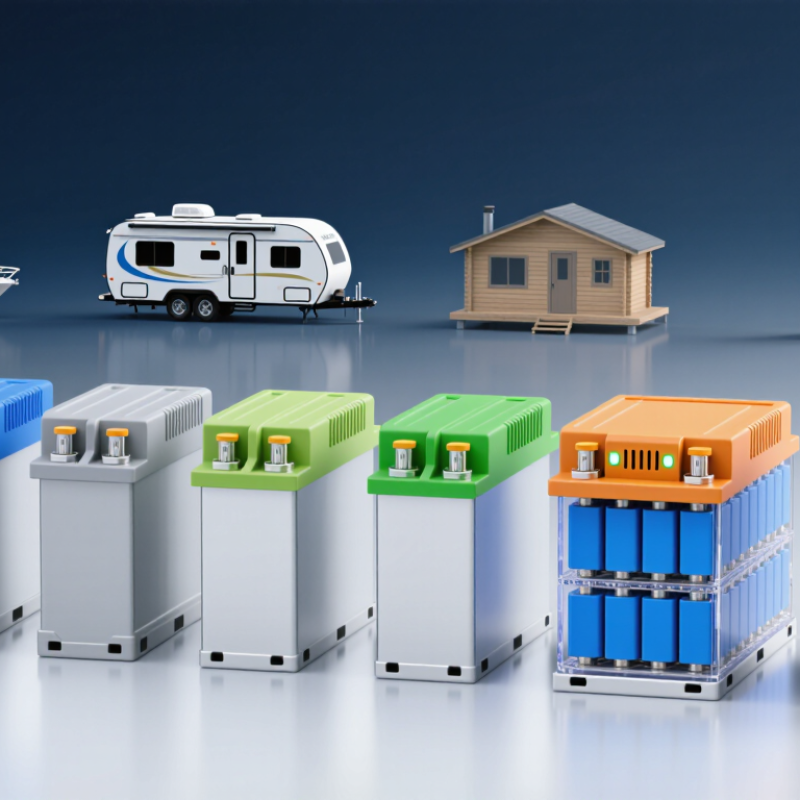
Representative LiFePO₄ form factors and voltage options commonly used to replace lead-acid systems.
The chart compares nominal energy across ten common replacement configurations. Energy is calculated from nominal voltage × rated capacity in ampere-hours. Actual usable energy depends on the battery management system, discharge rate, temperature, and manufacturer specifications.
Replacing lead acid systems with lithium requires more than matching voltage. The battery must fit the vehicle, workload, charging profile, and available space. For cars, scooters, and utility vehicles, lithium iron phosphate batteries offer stable output, low maintenance, and strong cycle life. Compact 12V and 24V modules suit smaller vehicles, while 48V packs support heavier electric equipment. Always check the motor controller and charger first. A battery can fit physically yet fail electrically.
Storage applications demand a different balance. Home backup systems often use deep-cycle lithium batteries with an integrated battery management system. This protects against overcharge, excessive discharge, temperature problems, and cell imbalance. For solar storage, usable capacity matters more than the label capacity. A properly sized pack can run lights, refrigeration, and communication equipment through evening demand. Still, real usage may exceed estimates. That part deserves honest review.
Industrial equipment needs rugged construction and predictable performance. Forklifts, floor machines, access platforms, and automated carts may benefit from high-cycle lithium designs, including lithium titanate options for rapid charging. In a Replace Lead Acid Battery With Lithium project, measure daily energy use, peak current, charging pauses, and operating temperature. Cable size and ventilation requirements also deserve attention. Some conversions look simple. They are not always simple. A professional inspection can prevent costly compatibility mistakes, especially when older equipment has unclear charging controls.
Lead acid replacement lithium batteries come in many forms, including LiFePO4, NMC, LTO, deep-cycle, marine, RV, UPS, solar, and industrial packs. Their chemistry, voltage, capacity, and enclosure affect every installation decision. A direct size match is not enough.
Charging must follow the battery maker’s voltage limits and temperature range. Lithium batteries usually need a charger with a lithium profile. Traditional lead acid charging can cause poor performance or damage. Set the correct absorption voltage, disable equalization, and avoid charging below freezing unless the battery has suitable protection. Allow ventilation around the charger and inspect cables for heat, loose terminals, or corrosion.
The battery management system, or BMS, protects against overcharge, over-discharge, excessive current, and temperature faults. It is not a substitute for correct system design. Select a BMS that matches the motor, inverter, charger, and expected surge current.
Installation also requires correct polarity, fuse placement, cable sizing, and secure mounting. A disconnected lead acid battery may have hidden wiring paths, so test the circuit before removing it.
I have seen rushed retrofits work for weeks, then fail under heavy load. That experience changed my practice: measure first, document every connection, and leave space for inspection.
Even a well-designed battery can underperform when terminals are poorly crimped or settings are guessed. Check the system after its first full charge and again after a demanding operating cycle.
Choosing the right lithium replacement battery starts with the equipment, not the battery label. Check the original lead acid battery’s voltage, capacity, dimensions, terminal position, and maximum current. A 12-volt system usually needs a lithium battery with a compatible operating range. However, matching voltage alone is not enough.
Think about daily use. For a small mobility device, stable discharge and low weight may matter most. For a backup system, usable capacity and standby performance deserve more attention. LiFePO4 batteries often provide long cycle life and steady voltage. Their built-in battery management system should protect against overcharge, over-discharge, overheating, and excessive current. Check the continuous and peak current ratings carefully. Motors can demand several times their normal running current.
Charging equipment also needs inspection. A lead acid charger may use a charging profile that is unsuitable for lithium chemistry. Use a charger approved for the battery’s chemistry and voltage. Measure the available space before ordering. A battery can fit the compartment yet fail because its terminals face the wrong direction.
Small details matter.
Temperature is another practical concern. Some lithium batteries cannot safely charge below freezing without protection. Review the operating limits, warranty terms, test documentation, and installation guidance. I have seen selection errors caused by focusing only on amp-hours. Real performance also depends on load, wiring, charging habits, and storage conditions. When specifications conflict, request clarification from a qualified supplier or technician before installation.
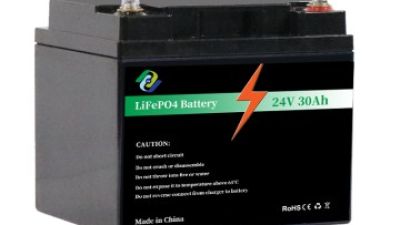
A customized 24V 30Ah LiFePO4 battery is a practical upgrade for replacing lead-acid power systems in backup equipment, mobility devices, solar storage, and outdoor applications. Its nominal voltage is 25.6V, with 768Wh of rated energy and a maximum continuous discharge current of 30A. Measuring 197 × 165 × 169mm and weighing approximately 7.5kg, it delivers comparable usable power at around one-third the weight of a typical lead-acid battery. This weight reduction can simplify installation and improve system portability.
The battery uses Grade-A new cells in a sealed ABS housing with an IP65-rated design, helping protect internal components from dust and water spray during outdoor use. Its expected service life exceeds 4,000 cycles, substantially reducing replacement frequency compared with conventional lead-acid systems. Industry research, including the International Energy Agency’s energy-storage analyses, recognizes lithium-ion technologies for their higher energy density and longer cycle performance, while the U.S. Department of Energy emphasizes that battery-management systems are essential for safe monitoring and protection.
Before replacing a lead-acid unit, verify that the charger supports a LiFePO4 charging profile and that the equipment can accept the battery’s voltage range and 30A discharge limit. Correct polarity, secure mounting, suitable cabling, and an integrated protection system are also important. With no routine watering or acid maintenance required, this 24V 30Ah configuration can provide stable, low-maintenance power for properly matched applications.
Lithium iron phosphate offers stable operation, long cycle life, and dependable daily performance. It suits many stationary and mobile systems.
No. Check capacity, dimensions, terminal position, current demand, and the battery’s operating voltage range. A physical fit can still fail electrically.
Use a charger with the correct lithium charging profile. Confirm voltage limits, temperature settings, and current ratings before connecting it.
It may use unsuitable settings. Disable equalization and avoid charging below freezing without proper protection. Charger compatibility needs verification.
The BMS helps prevent overcharge, over-discharge, excessive current, and temperature faults. It cannot repair poor wiring or incorrect system settings.
Motors can draw several times their normal running current. A battery may operate normally, then shut down during a heavy start.
Confirm polarity, fuse placement, cable size, terminal tightness, and secure mounting. Leave space around the battery for inspection and cooling.
Some cannot charge below freezing without dedicated protection. Review the specified temperature limits before placing the battery in an outdoor compartment.
Do not judge capacity from amp-hours alone. Load size, cable losses, charging habits, temperature, and storage conditions also affect usable energy.
No. Sodium-based batteries are a separate chemistry. They may suit moderate-range storage where lower weight is less important. Test data matters.
Lithium batteries are increasingly replacing traditional lead-acid systems because they offer higher energy density, longer service life, lower weight, faster charging, and more consistent power delivery. A Lead-Acid Replacement Lithium Battery can be designed for many applications, including vehicles, backup power systems, renewable energy storage, marine equipment, and industrial machinery. The ten main replacement types vary by lithium chemistry, capacity, voltage, construction, and intended operating environment.
Understanding the differences between lithium chemistries is essential for evaluating safety, cycle life, temperature performance, and power output. Battery form factors and voltage options must also match the original system and available installation space. Proper charging equipment, a compatible battery management system, ventilation, wiring, and protective measures are important for reliable operation. By considering energy demand, peak power, daily usage, environmental conditions, maintenance expectations, and total ownership cost, users can select the most suitable lithium replacement battery for their specific vehicle, storage system, or equipment.